
Karthik Subramanian had been selling kitchen storage containers from Coimbatore for almost a year before he noticed something odd in his orders. Every few days a small “Business Buyer” tag sat quietly next to certain order IDs. He assumed it was a label that meant nothing and scrolled past it, chasing the next discount coupon and the next sponsored ad. Then one slow afternoon he actually clicked on one. It was a school that had ordered 180 units in a single purchase, no haggling, no returns, no review anxiety. He had been ignoring his most valuable customers for months.
This is the strange thing about Amazon Business B2B in India. It is not hidden behind a paywall or a secret application. For most sellers it is already switched on, sitting inside the same Seller Central account they log into every day. The orders are coming. The buyers are real. And yet thousands of Indian sellers treat the entire channel as background noise. This guide will show you what you have been walking past and how to turn it into steady, high-volume sales.
The channel most Indian sellers walk straight past
The reason so many sellers miss this channel is simple. They built their entire mental model around the retail shopper, the person buying one toaster or two yoga mats for personal use. That instinct shapes every decision: the photos, the coupons, the festival sale planning. Business demand never enters the picture because nobody told them it was there.
Why B2C tunnel vision costs you bulk orders
When your whole strategy points at individual consumers, you optimise for the wrong things. You obsess over a single extra review while a procurement manager at a mid-sized company browses past your listing because it never offered bulk pricing. Many of these buyers behave like the resellers and traders you reach when leveraging wholesalers and manufacturers in your own supply chain. Sneha Kulkarni from Pune, who sells office stationery, realised this only after a corporate buyer asked her in chat whether she had a price for 500 units. She had no answer ready, and the buyer left.
The seller already sitting on B2B access
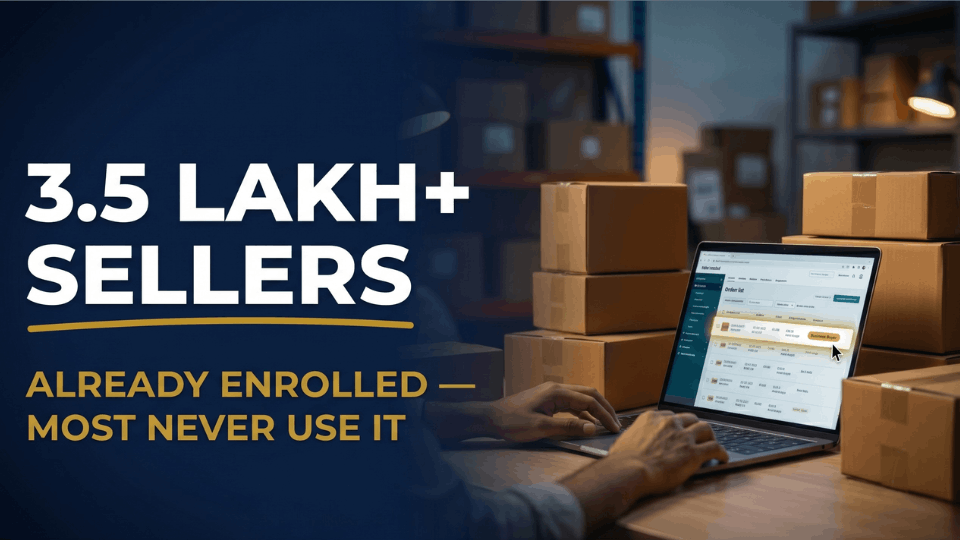
Here is the part that surprises people. Since mid-2018, every new seller registering on Amazon India is auto-enrolled into the Business program by default. Amazon Business in India now spans more than 3.5 lakh sellers and reaches close to 99.8 percent of pin codes. If you registered recently, the door is already open. You simply never walked through it.
What the Amazon B2B seller program actually is
The Amazon B2B seller program is a layer that sits on top of your normal selling account and unlocks features built specifically for business customers. It does not replace your retail business. It runs alongside it from the same dashboard, so the same product can serve a homemaker buying one unit and a factory buying a hundred.
Business customers versus retail shoppers
The buyers here are different. An Amazon Verified Business Customer has registered with valid business details and been verified by Amazon. These are companies, schools, hospitals, resellers and offices, not casual shoppers. They expect GST invoices, they buy in volume, and they tend to come back. That verification is what gives the channel its quality.
The features you unlock
Once you are active, you gain tools your retail listings never had. You can set business-only prices, offer tiered quantity discounts, build a business profile, and display certifications that procurement teams actually look for. Gurpreet Singh from Ludhiana, who sells industrial gloves, added quality certifications to his profile and watched enquiries from safety-equipment buyers climb within a few weeks, simply because he now looked credible to a professional buyer.
Why a business buyer on Amazon India behaves differently
Understanding the buyer changes how you sell. A retail shopper buys on emotion, gets distracted by a brighter thumbnail, and abandons carts on a whim. A business buyer thinks like an accountant. They compare total cost, delivery reliability and tax benefit, then they commit.
Logical, repeat, higher-volume purchasing
Because the decision is rational, it is also more loyal. When a business buyer in Amazon India finds a supplier who is dependable and priced sensibly for bulk, they rarely shop around every week. Mahesh Agarwal from Jaipur, who supplies packaging rolls, found that a single satisfied B2B account placed the same bulk order month after month, turning one good impression into predictable revenue.
B2B versus B2C: the mindset and margin gap
This is where Amazon B2B vs B2C selling really diverges. In B2C you fight for impulse and attention. In B2B you win on trust, paperwork and pricing logic. The volumes are larger, the returns are fewer, and the relationship outlasts any single sale. The catch is that you have to actually set the channel up to serve those buyers, not just hope they stumble onto your retail listing.
The fees myth: what Amazon Business actually costs
The biggest reason sellers avoid this channel is a myth: that B2B selling carries some extra, scary cost. It does not. Let us clear this up, because the confusion is keeping money out of your account.
No extra enrolment fee, same fee schedule
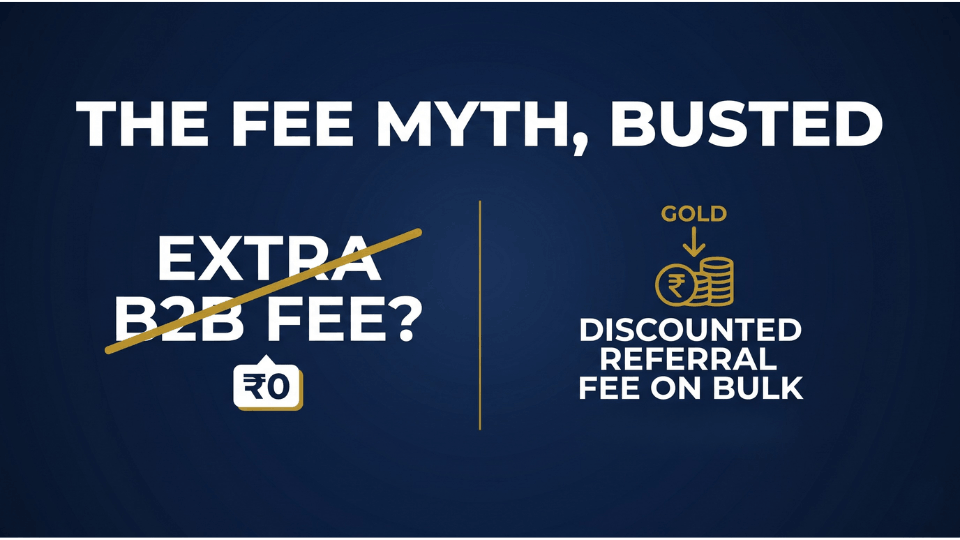
Enrolling in the program costs nothing beyond what you already pay. The standard Amazon.in fee schedule applies to Amazon Business seller fees exactly as it does to your retail sales, and it helps to go in already understanding Amazon’s full fee structure. There is no separate B2B subscription, no hidden charge for accessing business customers. If you are already a seller, you are already paying everything you need to pay.
The discounted referral fee on bulk orders
It actually gets better than neutral. On multi-unit bulk orders in select categories, Amazon offers discounted referral fees, meaning you can keep more on exactly the high-volume sales B2B is built around. Anand Menon from Kochi, who sells cleaning supplies, was stunned to learn he had been earning slightly better margins on his bulk business orders all along without realising why.
If you want a simple way to map this to your own category before you commit, our 3-Day Amazon Business Training walks through the exact fee structure category by category so you can plan with real numbers.
How to sell B2B on Amazon: enrolment and setup
Now the practical part. Learning how to sell B2B on Amazon is far less technical than most sellers fear. For many of you it is a matter of switching on what is already available rather than building anything new.
Checking if you are already enrolled
Log into Seller Central and open your account settings under Your Services. If you registered after mid-2018, you are very likely already enrolled and only need to start using the features. If you are still setting up, our guide to creating your Amazon seller account covers the basics first. Hiren Patel from Surat assumed he needed a whole new account and almost gave up, then discovered he had been a B2B seller the entire time.
GST registration is non-negotiable
To sell on Amazon Business properly, you need GST registration. GST registration is essential because business buyers purchase specifically to claim input tax credit, and that requires a valid GST invoice. Without GST, you simply cannot operate in this channel in any meaningful way.
Turning on Business pricing
Once you confirm access, the setup is quick:
- Open Seller Central and go to your account settings to confirm Business selling is active.
- Set a Business Price on the products that suit bulk buyers.
- Add Quantity Discount tiers to reward larger orders.
- Complete your business profile and upload any certifications you hold.
Most sellers finish this in an afternoon. From there, the listings quietly start appearing to business customers with the right pricing attached.
The two levers: Business Price and Quantity Discounts
The heart of this channel is pricing, and you control two distinct levers. Get these right and you become genuinely attractive to bulk buyers without touching your retail price.
Business Price: the buyer-only discount
A Business Price is a special rate visible only to verified business customers. Your regular price stays exactly the same for everyone else, so retail shoppers never see the cheaper rate. This lets you reward serious buyers without starting a price war on your public listing, and it pairs well with knowing how to decide your product’s selling price in the first place. Ritu Jain from Indore set a modest business price on her packaging tape and immediately looked more competitive to wholesale buyers while her retail margin stayed untouched.
Quantity Discounts: rewarding bulk
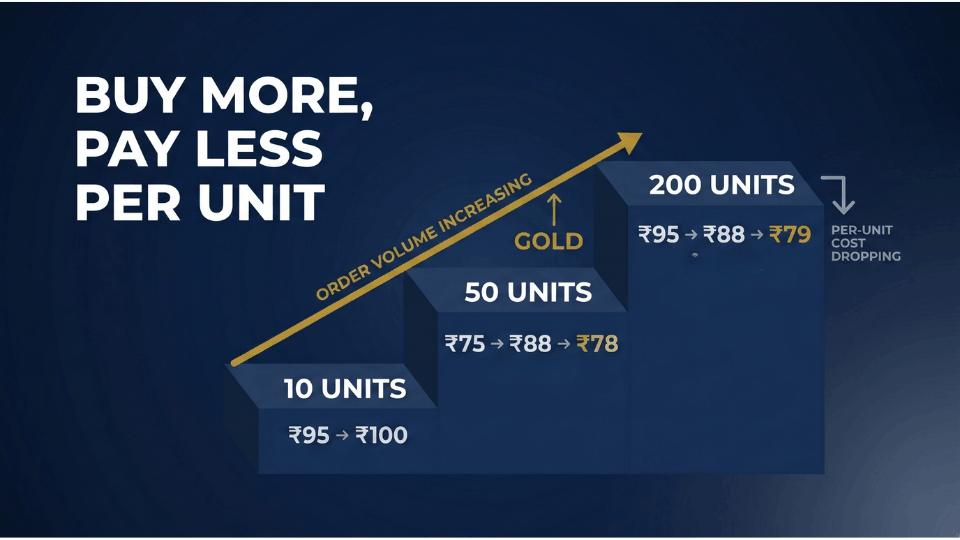
The second lever, Quantity Discounts, builds tiered pricing that drops as the order size grows. The combination of Amazon Business Price and Quantity Discount is what makes a procurement manager choose you over a similar listing. A buyer ordering ten units pays one rate; a buyer ordering two hundred pays less per unit and feels rewarded for committing, which is exactly the behaviour you want to encourage.
GST invoices and the input tax credit advantage
If pricing is the hook, the GST invoice is the reason business buyers bite. This single feature is what separates a casual purchase from a procurement decision.
Why input tax credit makes your listing attractive
When you provide an Amazon B2B GST invoice, the buyer can claim input tax credit of up to 18 percent on the purchase. For a business, that is a direct saving on every order. Two identical listings sitting side by side will lose to the one offering a proper business invoice, because the buyer is effectively paying less after claiming credit. The invoice is not paperwork; it is a selling point.
Auto-generated invoices and your obligation
Amazon generates the business invoice with the customer’s business name, GST number and purchase order details. In return, you are required to file your tax returns correctly at the transaction level so the buyer can claim that credit, which is easier once you understand how GST impacts Amazon sellers across the board. It is a small discipline that unlocks a large advantage.
For a deeper walkthrough of pricing and tax setup together, our 3-Day Amazon Business Training breaks down the full configuration so nothing slips through the cracks.
Who should lean into Amazon B2B selling in India
Honesty matters here, because Amazon B2B selling is not a magic switch for every product. It rewards some sellers far more than others, and knowing which group you fall into saves you wasted effort.
Strong-fit sellers
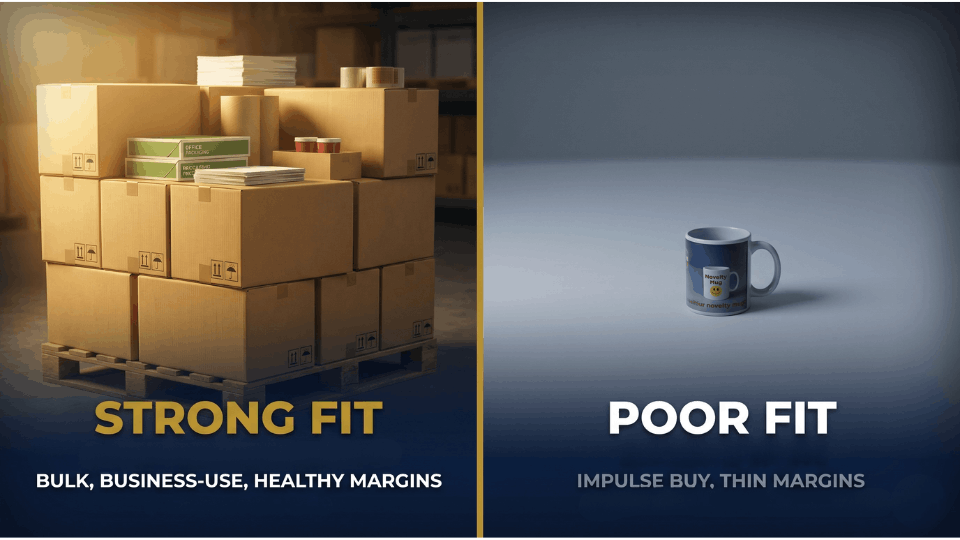
This channel suits you if your products move well in bulk, serve a clear business use, or carry enough margin to support tiered discounts. Office supplies, packaging, cleaning products, industrial items and dual-purpose goods all thrive here. An Amazon Business seller India who supplies, say, safety equipment to factories has a natural, repeatable market waiting.
When B2B is not worth the effort
If your product is purely an impulse or lifestyle buy with thin margins and no bulk logic, the effort may not pay off quickly. There is no shame in focusing on retail. The goal is to match the channel to your catalogue, not to force every product into a B2B box where it does not belong.
Frequently asked questions
What is the Amazon Business (B2B) seller program in India?
It is a selling program that lets you cater to verified business customers from your existing Seller Central account. You gain features like business-only pricing, quantity discounts, business profiles and automated GST invoices, all designed for bulk and professional buyers rather than ordinary retail shoppers.
How do I enrol as an Amazon B2B seller from Seller Central?
Most sellers are already enrolled by default. Log into Seller Central, open Your Services in account settings, and confirm that selling as a Business seller is active. If it is not, you can register in a few clicks. After that, you set your business prices and complete your profile.
What are the fees for selling on Amazon Business compared to B2C?
There is no extra cost to join. The standard Amazon.in fee schedule applies just as it does to retail selling, with no separate B2B subscription. In fact, on multi-unit bulk orders in select categories, you can earn discounted referral fees, so B2B can be slightly more favourable than B2C.
What is the difference between Business Price and Quantity Discounts?
A Business Price is a single discounted rate visible only to verified business customers, while your regular retail price stays unchanged for everyone else. Quantity Discounts go further by creating tiered pricing that drops as the order quantity rises, rewarding buyers who commit to larger volumes.
Do I need GST registration to sell on Amazon Business?
Yes. GST registration is essential because business buyers purchase to claim input tax credit, which requires a valid GST invoice. Without GST you cannot serve this channel properly, since the tax benefit is one of the main reasons businesses buy here in the first place.
Can I sell to both retail and business customers from the same account?
Yes, and that is the real advantage. You manage both B2B and B2C from one seller account with no separate setup. The same product can carry a public retail price for shoppers and a hidden business price for verified business buyers at the same time.
Do I have to list my entire catalogue on Amazon Business?
No. You choose which products to make available with business pricing. You can start with a handful of items that suit bulk buying, test the response, and expand only when it makes sense for your margins and inventory.
Conclusion
The most expensive mistake in this channel is assuming it is locked away when it is already open inside your account. Amazon Business is not a new platform to conquer or a secret club to apply for. It is a quietly powerful layer of verified, loyal, high-volume buyers that most sellers scroll past every single day, just as Karthik did before that one curious click.
Your next step is simple. Log in this week and look for the Business Buyer tags hiding in your own orders. Then set one business price and one quantity discount on a product that suits bulk demand. To build the full pricing, GST and procurement strategy with confidence, join our 3-Day Amazon Business Training and turn the channel you have been ignoring into the one that grows you.
