
Last October, Vinoth Sharma from Rajasthan spent three frustrating months sourcing bamboo desk organisers through Alibaba. He paid international shipping, waited 45 days for delivery, and received a batch with warped edges that he could not sell. The irony? A factory making the same product sat 80 kilometres from his home in Rajasthan. He just did not know how to find it.
This is a pattern that plays out across India every day. Thousands of Amazon sellers chase overseas suppliers while IndiaMART sourcing for Amazon sits right under their nose, connecting them to over 7.8 million domestic suppliers across virtually every product category. If you sell on Amazon India and you have not explored IndiaMART for private label sourcing, you are leaving a significant advantage on the table.
This guide walks you through the entire process, from setting up your buyer account to verifying genuine manufacturers, negotiating prices, and getting your private label product onto Amazon shelves. No fluff, no hype. Just the practical steps that work.
Why Indian Sellers Are Turning to IndiaMART for Sourcing
The Sourcing Gap Most New Sellers Face
Most new Amazon sellers in India start their sourcing journey on Alibaba or through local wholesale markets. The problem with Alibaba is that you end up competing with international sellers for the same Chinese factories, paying international freight, and dealing with customs delays. Local wholesale markets, on the other hand, rarely offer private labelling options or the kind of consistency you need for Amazon FBA. If you are still figuring out whether to work with wholesalers, traders, or go directly to factories, our guide on leveraging wholesalers, traders and manufacturers in your supply chain breaks down the differences.
Deepika Rao from Bangalore experienced this firsthand. She spent four months trying to source cotton tote bags from a Guangzhou supplier, only to realise that Tirupur, India's textile hub, had dozens of manufacturers offering better quality at 30% lower cost with no import duties. The moment she switched to sourcing domestically through IndiaMART, her landed cost dropped and her delivery timeline shrank from six weeks to ten days.
What Makes IndiaMART Different from Alibaba
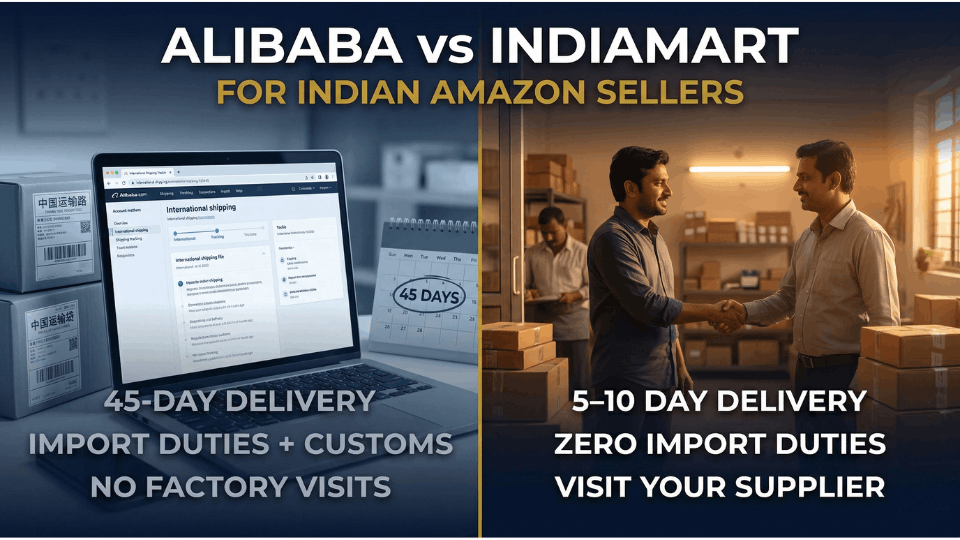
The question most sellers ask is whether IndiaMART is better than Alibaba for Indian Amazon sellers. They serve different purposes. Alibaba is export-oriented with built-in escrow payments. IndiaMART is domestic-focused, giving you direct factory access, communication in English and Hindi, lower MOQs, and the ability to visit suppliers in person. The catch is that IndiaMART lacks structured payment protection, so due diligence falls entirely on you. That trade-off is worth it when you know how to navigate the platform.
Setting Up Your IndiaMART Buyer Account the Right Way
Creating Your Profile for Serious Enquiries
Your IndiaMART profile is your first impression with suppliers. A generic profile with no business details gets ignored. Add your GST number, business name, and a clear description of what you are looking for. Use the “Post Buy Requirement” feature to broadcast your product needs to matching suppliers. This pulls quotes to you instead of you chasing them.
Suresh Nair from Kochi set up his profile with GST verification and a specific product brief for stainless steel kitchen accessories. Within 48 hours, he had 14 supplier responses compared to three before updating his profile.
How to Use IndiaMART Filters to Find Real Manufacturers
Finding the right supplier on IndiaMART starts with knowing how to find manufacturers on IndiaMART rather than trading companies. Use the “Business Type” filter and select “Manufacturer” to skip middlemen. Narrow results by location if you want suppliers close enough to visit. Check the supplier's response rate and years in business, both visible on their profile page.
Pay attention to product catalogues as well. A genuine manufacturer typically lists products within a focused category. If a supplier sells everything from leather bags to electronic cables, that is almost certainly a trader, not a factory.
How to Verify Genuine Suppliers on IndiaMART
Spotting Trading Companies vs Actual Factories
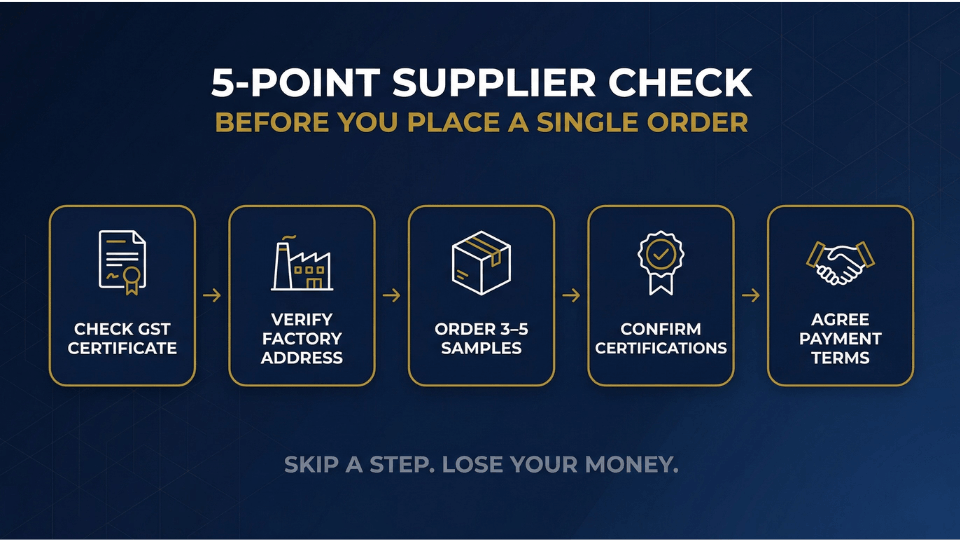
IndiaMART supplier verification is the single most important step in your sourcing process. Trading companies are not inherently bad, but they add a markup and reduce your control over quality. Here is how to spot them. Look for factory photos in the supplier's gallery, not just product shots. Check whether they have a physical manufacturing address listed, not just a registered office. Review their GST certificate to confirm they are registered as a manufacturer.
Ankit Gupta from Lucknow learned this lesson the hard way. He ordered 500 units of wooden phone stands from a supplier listed as a manufacturer. The products arrived with inconsistent finishes, and a quick visit to the “factory” revealed it was a two-room warehouse storing goods imported from Yiwu. He lost close to Rs 85,000 on that single order.
The Sample-First Rule That Saves You Lakhs
Never skip samples. Order three to five samples from your shortlisted suppliers and compare them for material quality, finish, dimensions, and packaging. If the supplier is within driving distance, visit the factory. For distant suppliers, request a video call where they walk you through the production floor. This one habit separates sellers who build reliable supply chains from those who constantly firefight quality issues.
Checking Certifications and Export Readiness
Even if you are selling only on Amazon.in, certifications matter. Look for ISO certification for quality management, BIS marks for products that require them, and FSSAI registration for food or health products. If you plan to expand to Amazon US or UAE later, check whether the supplier holds an Import Export Code. These details protect you from compliance issues that can get your listings suspended.
If you want a step-by-step system to pick, validate, and launch your first private label product on Amazon, the 3-Day Amazon Business Training walks you through the entire sourcing-to-selling pipeline.
Best Products to Source from IndiaMART for Amazon
High-Demand Categories Indian Manufacturers Excel At
When it comes to deciding what products to source from IndiaMART for Amazon FBA, play to India's manufacturing strengths. India is the world's largest cotton producer, which makes cotton textiles, bedsheets, towels, and apparel a natural fit. Home decor is another strong category, with Moradabad known for metal crafts, Rajasthan for leather goods, and Jaipur for handicrafts and jewellery.
Awantika from Pune built her entire Amazon brand around handcrafted jute bags sourced from West Bengal artisans she found on IndiaMART. Within eight months, she was selling 120 units per week with margins above 40%, largely because her products were unique enough to face minimal direct competition. Ayurvedic and herbal products, spices, ceramic cookware, and wooden kitchenware are other categories where Indian manufacturers deliver quality that competes globally. The best products to source from India for Amazon tend to be those that combine craftsmanship with everyday utility. For a deeper framework on identifying the right product, check out our guide on how to select a winning Amazon product in a saturated market.
Products to Avoid When Sourcing Domestically
Not every category suits domestic sourcing. Electronics and electronic accessories are tricky because quality consistency varies widely among smaller Indian manufacturers, and certification requirements are strict. Anything that requires complex injection moulding or precision engineering is generally better sourced from China, where the manufacturing infrastructure is more mature for those categories. Be realistic about where India's strengths lie and you will make smarter sourcing decisions.
Negotiating Prices and MOQs on IndiaMART
How to Get Better Rates Without Bulk Commitments
One of the biggest advantages of IndiaMART for private label sourcing is flexibility on minimum order quantities. Unlike Chinese suppliers who often demand 500 to 1,000 unit minimums, many Indian manufacturers on IndiaMART accept orders as low as 20 to 50 pieces. This is a significant advantage when you are testing a new product and do not want to commit lakhs of rupees upfront.
Rohan Desai from Surat used this to his advantage when launching a jute laptop sleeve brand. He started with a 50-unit test order at Rs 145 per unit. After the first batch sold out in three weeks, he negotiated a quarterly commitment of 500 units and brought his per-unit cost down to Rs 113, a 22% reduction. The key is to negotiate on repeat-order pricing rather than squeezing your supplier on the first order. Show them a growth trajectory and they will meet you halfway.
Payment Safety Tips for IndiaMART Transactions
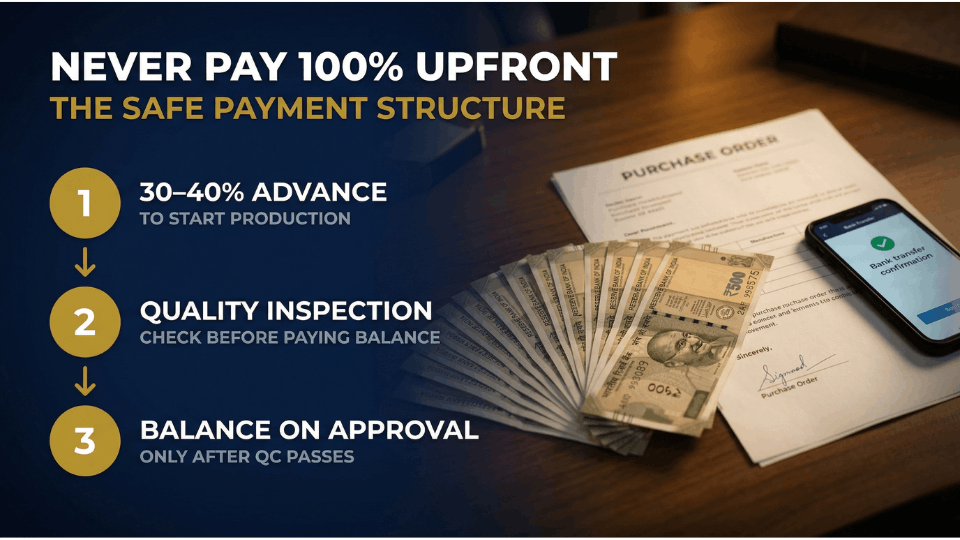
Unlike Alibaba, IndiaMART does not offer built-in escrow protection. Never pay full upfront. A standard structure is 30% to 40% advance to start production, with the balance paid after you inspect the finished goods. Get every agreement in writing, including unit price, quantity, delivery date, quality specifications, and return terms. Bank transfers with documented invoices are the safest route. For added protection, consider using Tazapay, a payment platform that IndiaMART supports.
Want to learn the exact margin calculations and pricing strategies that profitable Amazon India sellers use? The 3-Day Amazon Business Training covers sourcing math, FBA fee structures, and breakeven analysis in detail.
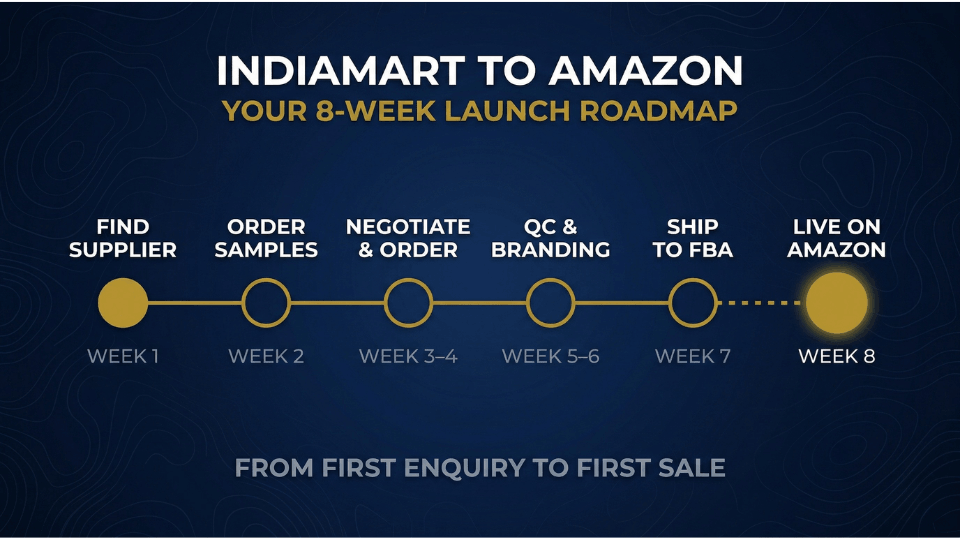
From IndiaMART to Amazon: Your Private Label Launch Checklist
Getting Your Product Private Label Ready
Once you have a reliable IndiaMART supplier, the next step is making the product yours. Private labelling through IndiaMART means working with your supplier on custom branding, logo placement, packaging design, and product inserts. Most manufacturers are willing to customise packaging if you meet their minimum order for branded units, which is often as low as 100 to 200 pieces. Our detailed walkthrough on getting products manufactured under your brand name covers this process end to end.
Kavita Singh from Delhi sourced brass decorative items from a Moradabad manufacturer and added her own brand packaging with care instructions and a thank-you card. That small investment in branding helped her earn a 4.6-star average rating and qualify for Amazon Brand Registry within four months.
Quality Control Before Shipping to Amazon FBA
Before any shipment goes to an Amazon fulfilment centre, run a quality check. Create a simple QC checklist covering dimensions, weight, finish, colour consistency, and packaging integrity. For high-value orders, consider hiring a third-party inspection agency. For smaller orders, a personal visit or detailed photo and video documentation from the supplier works. Catching defects before they reach Amazon saves you from negative reviews and return costs that eat into your margins.
Shipping and Inward to Amazon Fulfilment Centres
Domestic shipping is far simpler than international logistics. Coordinate with your supplier on FBA-compliant packaging, including FNSKU labels and correct box dimensions. Create your shipment plan in Seller Central, generate shipping labels, and arrange pickup through Amazon's partnered carriers or a third-party logistics provider. The entire process from supplier dispatch to Amazon inward typically takes five to eight days for domestic orders.
Common IndiaMART Sourcing Mistakes That Cost Sellers Money
Skipping Due Diligence on Supplier Background
The most expensive mistake is also the most common: trusting a supplier based on their IndiaMART catalogue alone. Catalogue photos can be borrowed, pricing can be misleading, and response speed does not equal reliability. Always verify the supplier's GST registration, check their physical address, and ideally speak to one or two of their existing buyers before placing a bulk order.
Neeraj Patel from Ahmedabad skipped this step and placed a Rs 1.2 lakh order for ceramic mugs with a supplier who had impressive product photos. The mugs arrived with uneven glazing and mismatched handles. A quick background check would have revealed that the supplier had only been registered for four months. Lesson learned.
Ignoring Amazon Compliance Requirements
Sourcing is only half the equation. Your product must meet Amazon India's compliance standards before it can go live. Products in certain categories require BIS certification. Food and health items need FSSAI licensing. If you plan to use Amazon Brand Registry, you need a registered trademark, and our step-by-step Brand Registry setup guide walks you through the entire process. Many IndiaMART Amazon India sellers source first and worry about compliance later, only to find their listings blocked or suspended. Build compliance into your sourcing checklist from day one and you will avoid costly delays. If GST compliance is still unclear for you, our guide on how GST impacts Amazon sellers in India is worth reading alongside this article.
FAQ — IndiaMART Sourcing for Amazon Private Label
Is IndiaMART good for Amazon private label sourcing?
Yes, IndiaMART is a strong option for Indian Amazon sellers sourcing private label products domestically. It offers access to over 7.8 million suppliers, low MOQs, and the ability to visit factories in person. Verify suppliers thoroughly and order samples before committing to bulk purchases.
How do I verify a genuine manufacturer on IndiaMART?
Check the supplier's GST certificate, look for the “Manufacturer” business type tag, and review factory photos in their gallery. Order samples before any bulk purchase. If possible, visit the factory or request a video walkthrough of the production floor.
What products can I source from IndiaMART for Amazon FBA?
India excels in cotton textiles, home decor, leather goods, jute products, brass and metal crafts, wooden kitchenware, jewellery, ayurvedic products, and spices. Stick to categories where Indian manufacturers have a natural advantage in raw materials and craftsmanship.
Is IndiaMART better than Alibaba for Indian Amazon sellers?
For India-based sellers on Amazon.in, IndiaMART often makes more sense because you avoid import duties, enjoy faster shipping, and can visit factories. Alibaba is better if you need structured payment protection or are sourcing categories like electronics where Chinese manufacturing is stronger.
What is the minimum order quantity on IndiaMART?
MOQs vary by supplier, but many manufacturers accept orders as low as 20 to 50 units. This is significantly lower than typical Alibaba MOQs, making it easier to test new products without heavy upfront investment.
Can I use IndiaMART to source products for Amazon Global Selling?
Yes, but ensure your supplier has an Import Export Code and experience with export documentation. Not all IndiaMART suppliers are export-ready, so ask about their export capabilities and international compliance standards before committing.
How do I handle returns or defective products from IndiaMART suppliers?
IndiaMART does not manage returns directly. Negotiate return and replacement terms with your supplier before placing an order. Include defect tolerance, replacement timelines, and refund conditions in your written agreement.
Do IndiaMART suppliers offer custom packaging and branding?
Most manufacturers offer custom packaging, logo printing, and branded inserts if you meet their minimum for customisation, typically 100 to 200 units. Discuss branding requirements early and request packaging samples before finalising the design.
Conclusion
IndiaMART gives Indian Amazon sellers a sourcing edge that most international competitors simply cannot match. You get direct factory access, lower logistics costs, the ability to visit suppliers in person, and MOQs that let you test before you invest. The key is treating sourcing like a skill, not a shortcut. Verify every supplier, sample every product, negotiate with data, and stay compliant with Amazon's requirements from day one.
If you are ready to build a private label brand that lasts, the 3-Day Amazon Business Training gives you the complete roadmap, from sourcing your first product to scaling your Amazon India business. Your supply chain is your competitive advantage. Start building it the right way.
