
The parcel comes back on a Tuesday. You recognise your own tape on the box, the label half-torn, and inside is the kurta set that shipped out nine days ago — worn once, faint perfume, a thread pulled at the hem. Amazon has already refunded the buyer. You are holding ₹640 of dead stock and a courier bill you paid twice. Multiply that by eleven returns in a week and you understand why your bank balance never quite matches your sales report.
Most sellers learn to manage returns on Amazon India the expensive way: one surprise at a time, never quite sure what they were owed or what they could have prevented. Returns get treated as a customer service chore instead of what they actually are — a controllable line in your profit and loss statement.
This walkthrough fixes that. How the return journey runs in India, who pays for what, where the money leaks, when Amazon owes you a reimbursement, and how to pull your return rate down without hurting conversions. By the end you will have a rhythm you can run in thirty minutes a week, and a clear sense of which returns to accept and which to fight.
Why Returns Quietly Eat Your Profit
Ritu Agarwal sells cotton kurta sets from Jaipur and was proud of her ₹42 lakh year — until she costed her returns properly and found that 27% of orders came back, taking roughly ₹3.9 lakh of margin with them. Four months of listing and sizing work brought that rate to 18%, and her net profit rose without a single extra sale. Nothing about her products changed. Only her attention did.
The real cost of one returned order
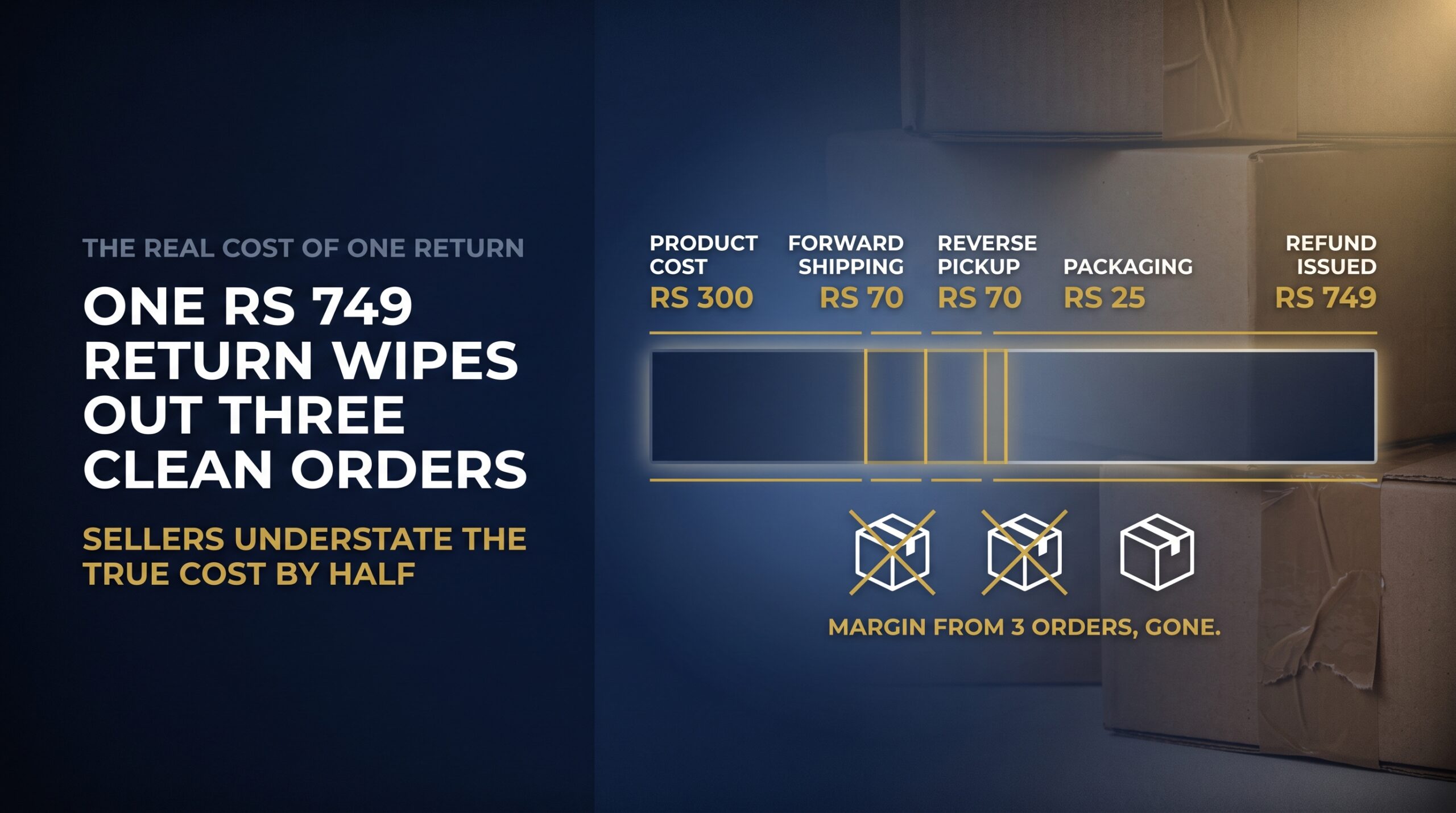
Take a ₹749 kurta with a ₹300 landed cost. Forward shipping ₹70, reverse pickup ₹70, the full refund, packaging ₹25, and a unit you can only relist at a discount. That single return wipes out the margin from roughly three clean orders. Sellers who look only at refund value understate their true cost by half.
Categories where returns hit hardest
Fashion and footwear lead by a distance, because fit is a guess made on a phone screen. Mobile accessories follow, usually for compatibility mismatches. Home décor suffers from colour and scale surprises. In these categories a 15–25% return rate is the terrain, not a failure — the job is to price for it, then chip away at it.
Returns as a margin metric, not a nuisance
Put return rate next to your ad cost and fee percentage on the same sheet. Track it per ASIN, per month, in rupees rather than counts, because one returned television matters more than twenty returned phone cases. Once the number sits beside your other costs, you start treating it like one.
How Amazon Returns Actually Work in India
The amazon seller return policy india framework is simpler than most sellers assume, but the details vary by category, and that variation is where money disappears. Mohammed Irfan, who sells kitchen appliances from Hyderabad, lost close to ₹60,000 in his first year because he did not know his category’s return window and shipped replacements that were never required.
The window buyers get and what triggers it
Return windows commonly run from 7 to 30 days after delivery depending on the category, with electronics, large appliances and fashion each treated differently. Buyers can cancel themselves within roughly 30 minutes of ordering; after that you can still cancel from Manage Orders if the item has not shipped. Check the window against your own category rather than assuming a blanket 30 days.
Fulfilled by Amazon versus self-ship journeys
With FBA and Easy Ship, Amazon collects the unit, refunds the buyer and routes the parcel to a fulfilment centre for grading, largely without your involvement. With merchant-fulfilled orders, the request lands in your dashboard, you authorise it, the buyer prints the return authorisation and label, and you refund after inspection.
Returnless refunds and when they apply
For low-value items where reverse logistics costs more than the product, Amazon may refund without asking for the unit back. It feels like theft the first time. Run the arithmetic on a ₹199 item with ₹70 each way in shipping and you will see why the platform, and often you, come out ahead.
Handling Returns Day to Day in Seller Central
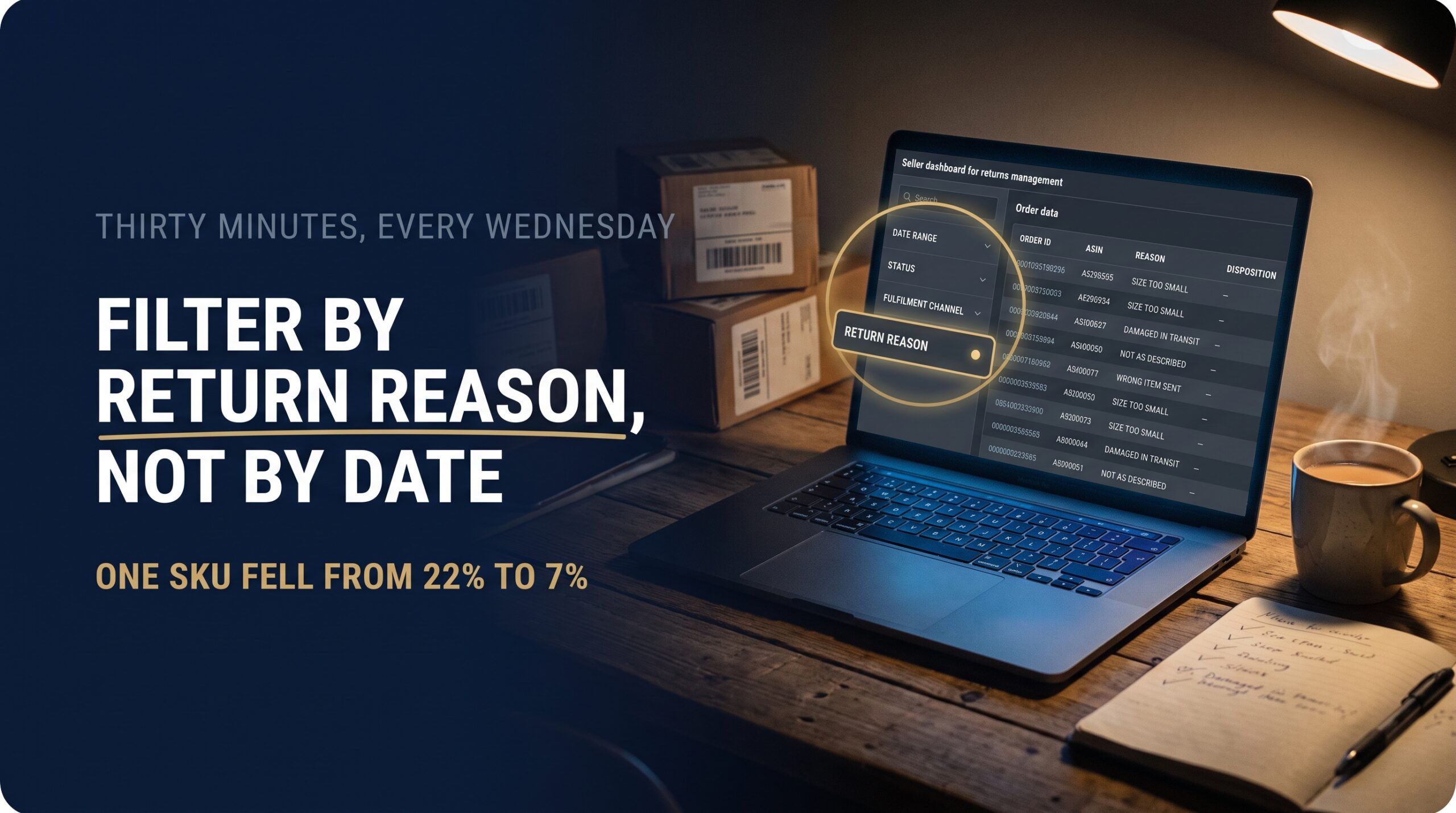
Sneha Kulkarni sells stationery from Pune and used to check returns whenever she remembered. After she blocked out Wednesday mornings to manage returns in Seller Central and read her reports properly, she caught a packaging defect on one notebook SKU within a fortnight and cut its return rate from 22% to 7%. The habit found the problem; the dashboard had been showing it all along.
Where returns live in your dashboard
Open Seller Central, go to the Orders tab and select Manage Returns. Filters on the left narrow by date, status, fulfilment channel or return reason, which is the view you actually want. Set auto-authorisation for requests that fall inside policy so routine cases clear themselves, and reserve manual review for high-value or suspicious ones.
Approving, rejecting and responding in time
Open a request and you can authorise it, close it, issue a full or partial refund, or message the buyer with an attachment if you need a photo. Authorising requires an authorisation number plus a confirmed return address. Act within the clock shown on each request — missing it hurts your metrics more than the refund does.
Reading the FBA returns report every week
Download the fba customer returns report every Monday and keep a running sheet with order ID, ASIN, return reason and disposition. Patterns surface fast: one reason code dominating a SKU, or units marked refunded that never physically arrived. That second pattern is money you can claim back.
If reading that sheet feels like a language you half understand, that is normal — and it is the kind of operating detail we work through together at the 3-Day Amazon Business Training, where you build the routine instead of guessing at it.
Who Actually Pays for the Return Shipping
Karthik Subramanian, who sells LED lighting from Coimbatore, assumed he paid for every return until an audit showed that 40% of his cases were buyer-remorse returns where the cost should never have touched his account. Correcting his settings and claiming what he was owed recovered around ₹88,000 over five months.
When the buyer bears the cost
If a buyer returns a perfectly good product because they changed their mind, chose the wrong size or found it cheaper elsewhere, return shipping is generally deducted from their refund rather than charged to you. This holds where the listing was accurate and the item arrived in the promised condition.
When the charge lands on you
Damaged, defective, wrong item shipped, or not as described — these are seller-caused reasons, and you carry the reverse logistics as well as the refund. Listing accuracy is therefore a shipping-cost decision, not just a conversion one. Every exaggerated photo eventually bills you twice.
Reimbursements you should be claiming
Amazon owes you when a returned unit is lost in its network, damaged at a fulfilment centre, refunded but never received, or disposed of without instruction. These do not always appear automatically. Reconcile refunds against physical returns monthly and raise the gaps, because nobody else is watching that column for you.
RTO Versus Customer Returns: Two Different Problems
Devender Yadav sells phone accessories from Delhi and spent months tuning his listings while his real bleed was undelivered cash-on-delivery orders. Separating the two numbers showed a 14% RTO rate; address verification calls and a prepaid discount brought it to 6% in ten weeks, worth roughly ₹1.2 lakh a year.
Why undelivered orders need their own fix
The difference in amazon rto vs customer return is where the failure happens. A customer return means the buyer received the product and rejected it — a product or expectation problem. An RTO means the parcel never reached them at all — an address, availability or payment-intent problem. Same refund, completely different cure.
Address quality, COD and delivery attempts
RTO clusters around cash on delivery, incomplete addresses, unreachable phone numbers and pin codes with weak last-mile coverage. Nudging buyers towards prepaid, keeping product pages honest about delivery timelines and flagging repeat problem pin codes all move the number.
Tracking both rates separately each month
Keep two columns: returns as a percentage of delivered orders, and RTO as a percentage of dispatched orders. Reviewed monthly, they tell you whether to fix your listing or your logistics — and stop you spending effort on the wrong one.
Filing a SAFE-T Claim the Right Way
Priya Menon runs a home fragrance brand from Kochi and recovered about ₹1.8 lakh in six months simply by filing claims she had previously written off as bad luck. Her rule is unglamorous: every returned unit gets photographed the day it arrives, before anything else happens to it.
Situations that qualify for a claim
A safe-t claim amazon india is a reimbursement request you raise when a return outcome leaves you unfairly out of pocket: the buyer sent back a different or heavily used item, the unit came back damaged beyond its original condition, a refund was issued without the product returning, or Amazon refunded outside policy. Buyer’s remorse on an accurate listing does not qualify.
Evidence that gets claims approved
Claims succeed on documentation, not argument. Dated photographs of the returned unit and its packaging, the original dispatch photo or packing checklist, the order ID, the return tracking reference, and a plain factual description of the discrepancy. Two clear photos beat two paragraphs of frustration every time.
Deadlines, appeals and follow-up
File within 60 days of the refund date — miss it and the money is gone regardless of merit. If a claim is rejected, read the stated reason, add the specific evidence it says was missing, and reply on the same case rather than opening a new one. Polite persistence wins a meaningful share of reversals.

Recovering money you are owed is one system; preventing the loss is another, and both get built the same way — deliberately. You can work through them with guidance when you take a seat at the 3-Day Amazon Business Training.
Cutting Your Return Rate at the Source
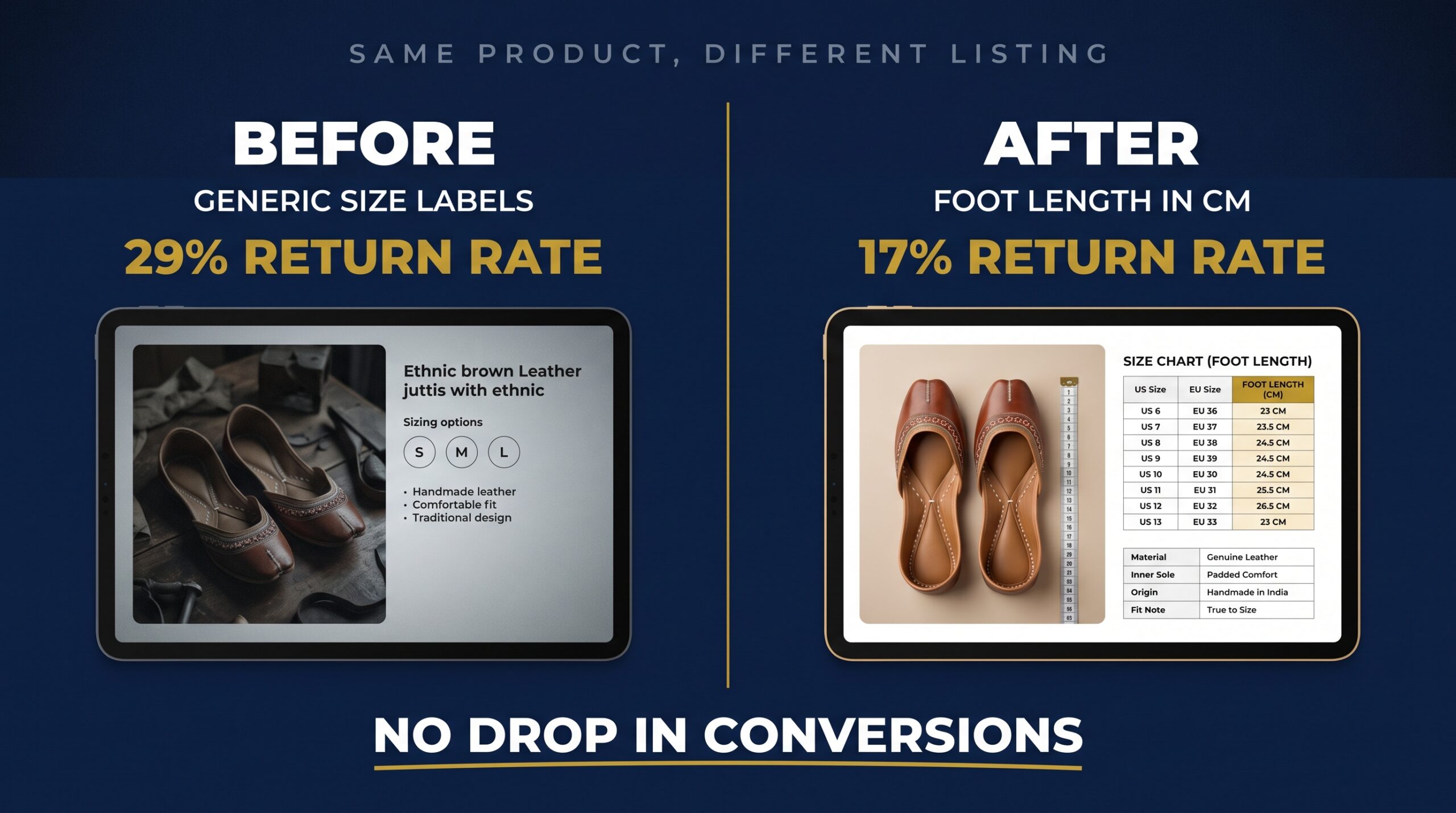
Arjun Deshpande sells ethnic footwear from Nagpur and had a 29% return rate with “size too small” as the top reason. He remeasured every SKU, published a foot-length chart in centimetres and added a sizing note to his images; within three months the rate sat at 17% with no drop in conversions. Understanding how to reduce return rate on amazon usually starts with reading your own return reasons honestly.
Listings that set accurate expectations
Shoot products in daylight against neutral backgrounds and show scale with a familiar object. Write bullets that state what the product does not do as clearly as what it does. A listing that slightly undersells converts a little less and returns a lot less.
Sizing, fit and specification fixes
For apparel and footwear, publish garment measurements rather than generic S/M/L labels, and say whether the fit runs snug. For electronics, list compatibility explicitly — model numbers, voltage, port types. Most “not as described” returns are really “I assumed and you did not correct me”.
Packaging that survives reverse logistics
Reverse journeys are rougher than forward ones because buyers repack casually. Use rigid boxes over polybags for anything fragile, double-tape seams, and add a small insert explaining correct usage. Damage claims fall when the product survives both directions. Here is the weekly loop that does most of the work:
- Pull your top three return reasons by ASIN, not by total order count.
- Fix the listing element each reason points at, one SKU at a time.
- Add a size chart, spec table or short how-to video where confusion repeats.
- Flag buyers with repeated high-value returns through Seller Support.
- Re-check the same ASINs 30 days later to confirm the fix held.
Run that loop for a quarter and the top offenders stop being offenders. What remains is a predictable cost you can price into your margin.
What Happens to Stock After It Comes Back
Farhan Qureshi sells bedsheets from Lucknow and once discovered 340 returned units sitting unsellable in a fulfilment centre, quietly accruing storage fees. A single removal order and a liquidation decision recovered about ₹47,000 and cleared six months of dead weight.
Grading returned units honestly
Inspect every returned unit against a fixed standard: sellable as new, sellable as used, refurbishable, or scrap. Grading generously to protect your inventory value creates negative reviews later, and those cost more than the write-off you avoided.
Relisting, liquidating or writing off
Genuinely untouched units go back into sellable stock. Opened-but-intact goods can be sold through a used condition listing or a discounted channel outside Amazon. Anything below that should be liquidated quickly rather than stored in hope.
Removal orders and warehouse hygiene
Check your unfulfillable inventory report monthly and raise removal orders before storage fees outrun the stock’s value. Returned inventory that sits untouched for a quarter is rarely worth what you think it is.
Building a Returns System You Can Run Weekly
Nisha Bhatt, who sells beauty products from Ahmedabad, reached about 900 orders a month before returns admin started eating her Sundays. She hired a part-time assistant at ₹12,000 a month; claims recovery alone paid for the role within seven weeks.
A 30-minute weekly returns review
Open Manage Returns and clear pending requests. Download the FBA returns report and log reasons. File eligible claims. Check unfulfillable inventory. Note the top offending ASIN. Same order, same day, every week.
Numbers worth putting on a dashboard
Four figures are enough: return rate as a percentage of delivered orders, RTO rate, rupee value of returns, and reimbursements recovered. When buyers ask about refunds, tell them plainly that credit typically lands within 3–5 working days of processing, depending on their bank.
When to hire or outsource the work
When returns admin crosses four or five hours a week, or unfiled claims exceed what an assistant costs, delegate. Keep the weekly review yourself — the patterns in it are your product roadmap.
Frequently Asked Questions
How do I manage returns on Amazon India from Seller Central?
Open the Orders tab and click Manage Returns. Filter by date, status, fulfilment channel or return reason. From a request you can authorise it with an authorisation number, close it, issue a full or partial refund, or message the buyer. Enable auto-authorisation for in-policy returns and review high-value cases manually.
Who pays the return shipping cost for Amazon India sellers?
It depends on the reason. When a buyer returns an accurate, undamaged product because they changed their mind or ordered the wrong size, return shipping is generally deducted from their refund. When the item was damaged, defective, wrong or misdescribed, you carry the reverse logistics alongside the refund.
What is a SAFE-T claim and when can a seller file one?
A SAFE-T claim is your reimbursement route when a return leaves you unfairly out of pocket. File one when a buyer returns a different or heavily used item, when a unit comes back damaged beyond its original condition, when a refund is issued but nothing arrives, or when a refund falls outside policy — within 60 days.
How long does an Amazon refund take to reach the buyer?
Once processed, credit typically reaches the buyer within 3 to 5 working days, depending on payment method and bank. Card and net-banking refunds usually take the longer end; wallet and Amazon Pay balance refunds clear faster. Say this upfront in your messages — most follow-up complaints are about uncertainty, not the wait.
How can Amazon sellers reduce high return rates in India?
Start with your own data. Pull return reasons by ASIN, identify the top three, and fix the listing element each points to — measurements, compatibility specs, colour accuracy or packaging strength. Publish real product measurements instead of generic size labels, shoot photos showing true scale, and re-check those SKUs after 30 days.
What return rate is considered normal for an Indian seller?
It varies sharply by category. Fashion and footwear commonly sit between 15% and 25%, electronics and accessories around 8% to 15%, consumables and books often below 5%. Rather than chasing a universal benchmark, compare your ASINs against each other and your own trend line. A SKU returning at double your average deserves attention first.
Can I refuse a return if the product comes back used or damaged?
For merchant-fulfilled orders you can issue a partial refund reflecting the reduced condition, or close the request with a clear stated reason, provided you have dated photographs. For FBA orders the refund is usually already processed, so your route is a SAFE-T claim. Photograph every returned unit the day it arrives.
Do high returns affect my account health or Buy Box?
Yes, indirectly but meaningfully. Persistent returns for defects or inaccurate descriptions feed into order defect metrics and product quality flags, which can trigger listing suppression and weaken Buy Box competitiveness. Buyer-remorse returns carry less weight than seller-caused ones, so watch your return reason mix rather than only the headline rate.
Conclusion
Returns are not a fixed tax on selling online. They are a cost with visible causes: a size chart you never published, a spec you never listed, a claim you never filed, a report you never downloaded. Sellers who audit return reasons monthly, recover what Amazon owes them and fix the top three offending SKUs keep margin that their competitors quietly surrender every week.
You now know how the journey works, who pays for what, when to claim, and how to run a thirty-minute weekly review that catches problems while they are small. Pick one thing this week — download your returns report and read it properly.
If you would rather build these systems with someone who has already run them at scale, come and learn it at the 3-Day Amazon Business Training and start protecting the margin you have already earned.
