
On the morning of 11 November, Karthik Raman opened Seller Central in Coimbatore and felt his stomach drop. The festive rush was over. His brass diya sets had sold well for a month, but 1,400 of them were still sitting in an Amazon fulfilment centre, and nobody buys diyas in December. His ads were still bidding at sale-week levels, burning ₹6,000 a day on clicks that no longer converted. And every few hours, another return notification landed.
Excess inventory on Amazon is the hangover almost every seller wakes up to after the Great Indian Festival, and it rarely arrives alone. Leftover stock, runaway ad spend and the post-sale returns wave all hit in the same few weeks, while you’re still tired from the sale itself.
This guide covers all three: sorting leftover stock, what holding it in FBA costs, when to sell through or pull out, winding ads down, and recovering money from returns. Let’s start with why this week matters more than you think.
Your Post-Diwali Sale Strategy Starts This Week
What happens to demand after Bhai Dooj?
Diwali fell on 8 November this year, and Bhai Dooj closed the festive week on the 10th. Most shoppers spent their festive budgets weeks ago, during the Great Indian Festival. Demand doesn’t crash overnight, though. It tapers. Gifting categories keep moving through the wedding season, and Amazon’s late-November sale events give you one more high-traffic window to clear stock.
The three leaks: stock, ad spend and returns
Think of the weeks after Diwali as three leaks in the same bucket. Leftover stock locks up cash and keeps collecting storage fees. Ads set for sale-week traffic keep charging sale-week prices for ordinary-week buyers. Returns quietly pull money back out of your settlements. Together, they can eat a big share of your October profit.
Why acting in November beats waiting till March
Most sellers deal with the hangover in March, when the storage charges finally get their attention. Meera Iyer from Chennai learned this the hard way. She left 900 festive gift hampers in FBA until February, then paid to remove them anyway, after four months of fees she could have avoided with one decision in November. The fix starts with knowing exactly what you have.

Sort Your Excess Inventory on Amazon Before You Act
Festive-only stock or evergreen stock?
Before you cut a single price, split your leftover stock into two piles. Festive-only stock, like diyas, rangoli kits and Diwali hampers, is effectively dead until next October. Evergreen stock, like kitchen tools or everyday home décor, simply needs more time to sell through. Mix them up, and you’ll discount products that would have sold at full price by January.
How many days of cover do you really have?
For each SKU, divide units on hand by your average daily sales over the last seven days, not the sale-week average. That number is your days of cover. Anything above 90 days is excess, and anything above 180 days needs action now.
Which Seller Central reports should you pull?
Pull these views before you make any decision:
- Your FBA inventory list, which shows units available, inbound and reserved for every SKU.
- The inventory age view, which shows how long each unit has been in the fulfilment centre.
- Manage Excess Inventory, where Amazon flags overstocked SKUs and suggests price or removal actions.
- The Inventory Performance dashboard, which shows your IPI score and what is pulling it down.
Neha Agarwal from Jaipur ran this exercise after Diwali. Her overall stock looked healthy, but three festive wall-hanging SKUs held 70% of her excess. She focused every clearance action on those three and kept full margins on everything else.
Amazon FBA Long Term Storage Fees in India, Explained
Monthly storage fee vs aged inventory surcharge
Amazon charges two different storage costs, and sellers often confuse them. The monthly storage fee applies to every unit in a fulfilment centre, based on the space it occupies. The aged inventory surcharge, which replaced the older long-term storage fee, applies only once units cross an age threshold, and it is charged on top of the monthly fee. Check current India rates on the FBA fee page in Seller Central, as older articles often quote outdated numbers.
When does your festive stock start ageing?
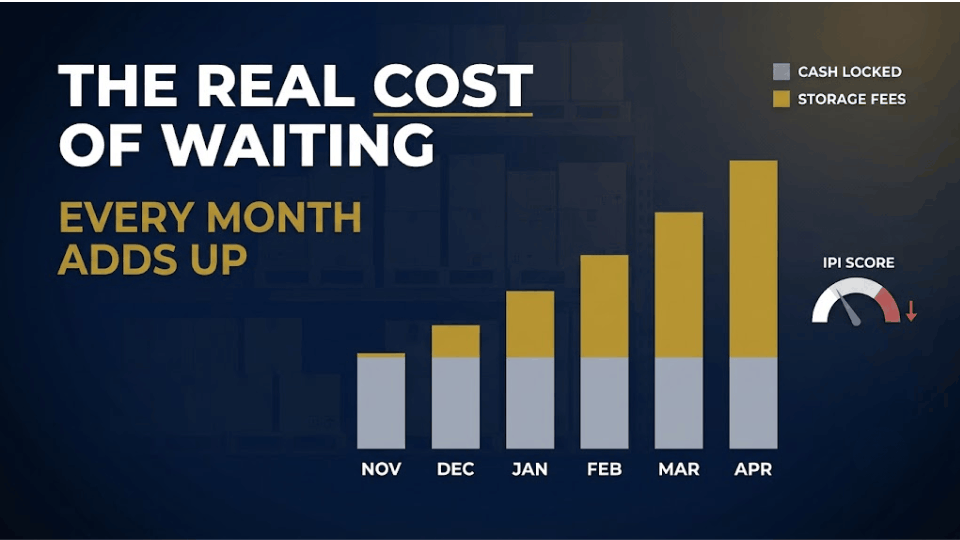
Stock you sent in during August and September won’t hit the aged surcharge for several more months. So the real cost right now isn’t a penalty. It’s the cash sitting on shelves and the monthly fee ticking away. Every ₹1 lakh of leftover stock is ₹1 lakh you can’t spend on next season’s best sellers.
How excess stock drags down your IPI score
Your Inventory Performance Index (IPI) measures how well you balance stock against sales. Slow-moving units pull it down, and a low score can mean tighter storage limits exactly when you need more space. Imran Shaikh from Pune ignored his leftover festive kitchenware for a whole season. His IPI dropped, and his storage limit was cut just before the next Great Indian Festival.
If you’d rather not build this from scratch, grab our Post-Sale Inventory Triage Sheet [RESOURCE LINK]. Plug in your units on hand and last seven days of sales, and it tells you which SKUs to hold, discount or pull out.
How to Sell Through Excess Inventory on Amazon
Price cuts and coupons that still protect your margin
Selling through on your own listing usually recovers more money than any other exit, but only if you discount with a floor in mind. Your floor is landed cost plus Amazon fees for each SKU. Coupons often work better than a straight price cut. The badge catches the eye in search, and switching it off doesn’t make your price look like it crashed.
Reposition festive stock for weddings and housewarmings
A diya set is a Diwali product only because your listing says so. Strip the Diwali references from your title, bullets and main image, and reposition the same product for wedding return gifts, housewarming gifts or corporate gifting. Divya Menon from Kochi did exactly this with 600 leftover brass diya sets. She rewrote the listing around wedding return gifts, added a set-of-12 option, and cleared about 60% of the stock by mid-December at a smaller discount than she had planned.
Use bundles and the late-November sale window
Pair a slow mover with a fast seller as a bundle, so your best product pulls the leftover stock along with it. Then plan a deal for Amazon’s late-November sale events, when traffic picks up again.
Amazon FBA Removal Order vs Liquidation: Which Wins?
When does a removal order make sense?
A removal order brings your stock back from the fulfilment centre to your own address for a per-unit fee. It makes sense when you can sell the stock elsewhere, such as Flipkart, Meesho, your own website or local retailers. It also suits festive stock you’ll store until next October, since eleven months in your own godown usually costs less than in FBA. Creating one takes a few minutes:
- Open your FBA inventory list and select the SKUs you want to pull out.
- Choose Create removal order from the actions menu.
- Pick your removal method and enter the quantity for each SKU.
- Confirm the return address and submit the order.
Removals can take weeks to arrive, so start early.
Is FBA liquidation an option for Indian sellers?
Under FBA Liquidations, Amazon sells your excess stock to bulk buyers and pays you a small net recovery. Check whether Liquidations appears as a method on your Create removal order page. If not, remove the stock and sell it in bulk to wholesalers or clearance buyers.
The simple maths: remove now or keep holding?
Compare two numbers for each SKU. The first is the removal fee plus the cost of shipping it onwards. The second is the monthly storage fee multiplied by the months you expect it to sit, plus any surcharge it will cross into. Harpreet Singh from Ludhiana ran this sum on 800 woollen stoles selling three a week. He removed them, sold them through two local retailers within a month, and put the money into his best seller.

Amazon PPC After the Sale: Wind Down Without Crashing
Pause Diwali and gift keywords first
Search terms like “diwali gift”, “diya set for diwali” and “festive hamper” stop converting almost the moment the festival ends, but your campaigns don’t know that. Pull your search term report for the last 14 days, find every festive term, and pause it or add it as a negative.
How to reduce ad spend after the sale in stages
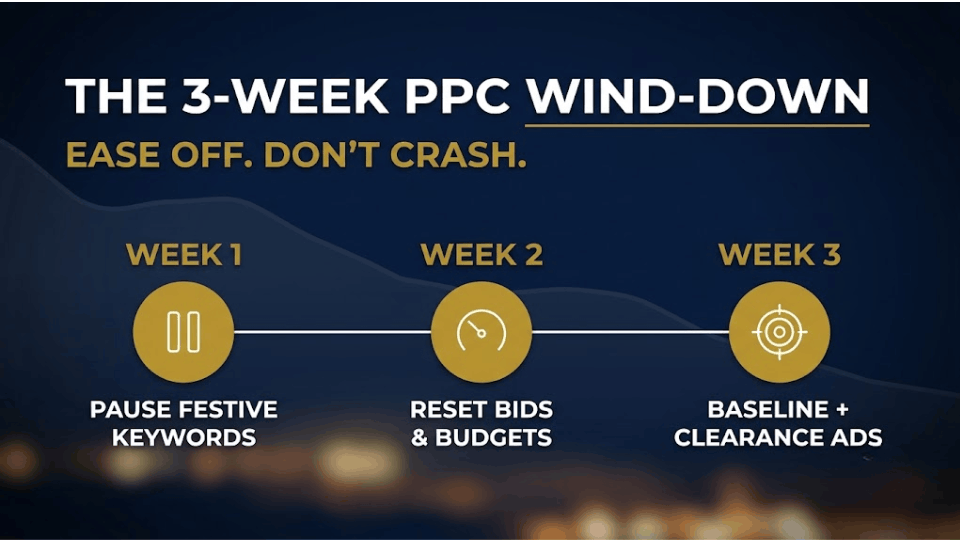
Don’t slash every budget in one go. A sudden cut can drop your ranking just as late buyers arrive, so wind down over three weeks. In week one, pause festive terms and bring bids down from sale-week levels. In week two, cut budgets on campaigns whose ACoS has crossed your target. By week three, you should be back at your pre-sale baseline. Ritu Banerjee from Kolkata skipped this and watched her ACoS jump from 28% to 61% in the week after Diwali, simply because her bids were still set for sale-week competition.
Point your remaining budget at the stock you need to clear
The budget you keep should work hardest on your excess SKUs. Ads on a slow mover, paired with a coupon, speed up sell-through far more than either does alone. Before you switch anything off, save the search terms that converted during the sale. They’re your head start for next year’s festive campaigns.
Want this as something you can tick off? Our Post-Festive PPC Wind-Down Checklist [RESOURCE LINK] lays out the three-week plan with the exact reports to pull each week.
Amazon Returns After Sale: Protect Every Rupee
Why do returns peak weeks after the sale?
Returns lag behind the sale. Impulse purchases made at 2 a.m. during a lightning deal, size mismatches, duplicate gifts and changed minds all come back over the following weeks. Expect your return rate to climb through November before it settles.
Read your FBA customer returns report properly
Download the FBA customer returns report from Seller Central and sort it by return reason and by status. The status tells you whether a unit went back into sellable stock or was marked unsellable, and who Amazon says caused the damage. And if one SKU keeps coming back as “too small” or “not as described”, that’s a listing problem you can fix before the next sale.
Claim FBA reimbursements for missing or damaged returns
Sometimes a customer is refunded but the unit never makes it back into your inventory, or it comes back damaged in the warehouse. Under Amazon’s FBA reimbursement policy, you may be owed money in both cases, but claim windows are limited, so check the current India policy and file promptly. Sanjay Patel from Ahmedabad found 40 refunded units of ethnic wear from last year’s festive sale that never returned to his stock. He filed a claim for each one and recovered most of the value within a month.
Frequently Asked Questions
How do I get rid of excess inventory on Amazon?
Start by selling through on your own listing with coupons, bundles and repositioned listings, because that recovers the most money. If a SKU still won’t move, create a removal order and sell the stock through another channel or in bulk. Treat liquidation, where it’s available, as a last resort, since the payout is small.
Does Amazon charge for unsold inventory sitting in FBA?
Yes. Every unit in a fulfilment centre attracts a monthly storage fee based on the space it takes up. Units that stay past Amazon’s age threshold also attract an aged inventory surcharge on top of that. Check current India rates in Seller Central.
Is a removal order or liquidation better for excess stock?
A removal order is better when you can resell the stock elsewhere or store it cheaply until next season, because you keep most of its value. Liquidation suits low-value units you simply want gone, since the payout is a small fraction of the selling price.
Should I cut my PPC budget right after a big sale?
Not all at once. Pause festive keywords immediately, then bring bids and budgets down over two to three weeks. Demand tapers gradually after Diwali, and a sudden cut can hurt your ranking just as late buyers arrive. Keep some budget on the excess SKUs you need to clear.
How do I get reimbursed for a damaged or wrong item returned after a sale?
For FBA orders, Amazon receives and inspects the return. If a refunded unit never came back to your stock, or was damaged in Amazon’s care, you can request reimbursement under the FBA reimbursement policy. File within the claim window.
Can I file a SAFE-T claim for an FBA return?
Generally, no. SAFE-T claims are meant for seller-fulfilled orders, where you handle shipping and returns yourself. FBA returns go through Amazon’s FBA reimbursement process instead. Keep the two separate if you use both models.
Should I keep leftover Diwali stock in FBA until next year?
Usually not. Eleven months of storage fees, plus the aged inventory surcharge once units cross Amazon’s threshold, often costs more than removing the stock and storing it yourself. Clearing it also protects your IPI score and your storage limits ahead of the next festive season.
How can I avoid excess inventory next festive season?
Plan from your post-sale data, not your hopes. Use this year’s sell-through by SKU to set next year’s quantities, send festive-only stock in smaller batches, and keep a reorder buffer instead of one big shipment. Review stock weekly during the sale so you can stop replenishing slow movers early.
Conclusion
The Diwali sale is the exam, and November is when the results come in. Sellers who sort their stock, wind down their ads and chase every return in the weeks after the festival start the new year with more cash, healthier inventory and clean data for next season. Sellers who wait until March pay for the same mistakes twice.
This week, work out your days of cover, pause your festive keywords and download your returns report. Each step closes one leak.
If you want a system that keeps your inventory and ads in balance all year, not just after Diwali, join us for the 3-Day Amazon Business Training. Your next festive season will thank you.
