
The first time Kiran noticed it, he was standing in his own warehouse in Surat with a cup of tea going cold on a carton. His bestselling steel lunch box had done 60 orders a day for three weeks. That morning: nine. Same price, same listing, same ad budget. He pulled up the product page on his phone and typed how to win amazon buy box in india into Google before he had even finished scrolling — because there, under “Sold by”, sat someone else’s name, and his own offer had been pushed behind a small grey link that read “Other sellers on Amazon”.
He had not lost the listing. He had lost the featured offer, and with it almost every order on the page.
That quiet, invisible switch is what most sellers are really asking about. The instinct is to drop the price by ten rupees, then twenty, then fifty, until something moves. It usually works for a week and wrecks your margin for a quarter.
There is a better way, and it has almost nothing to do with price. The Buy Box is an operations scoreboard. Fix the operations and the badge comes back — and stays.
What the Buy Box Is and Why It Drives Sales
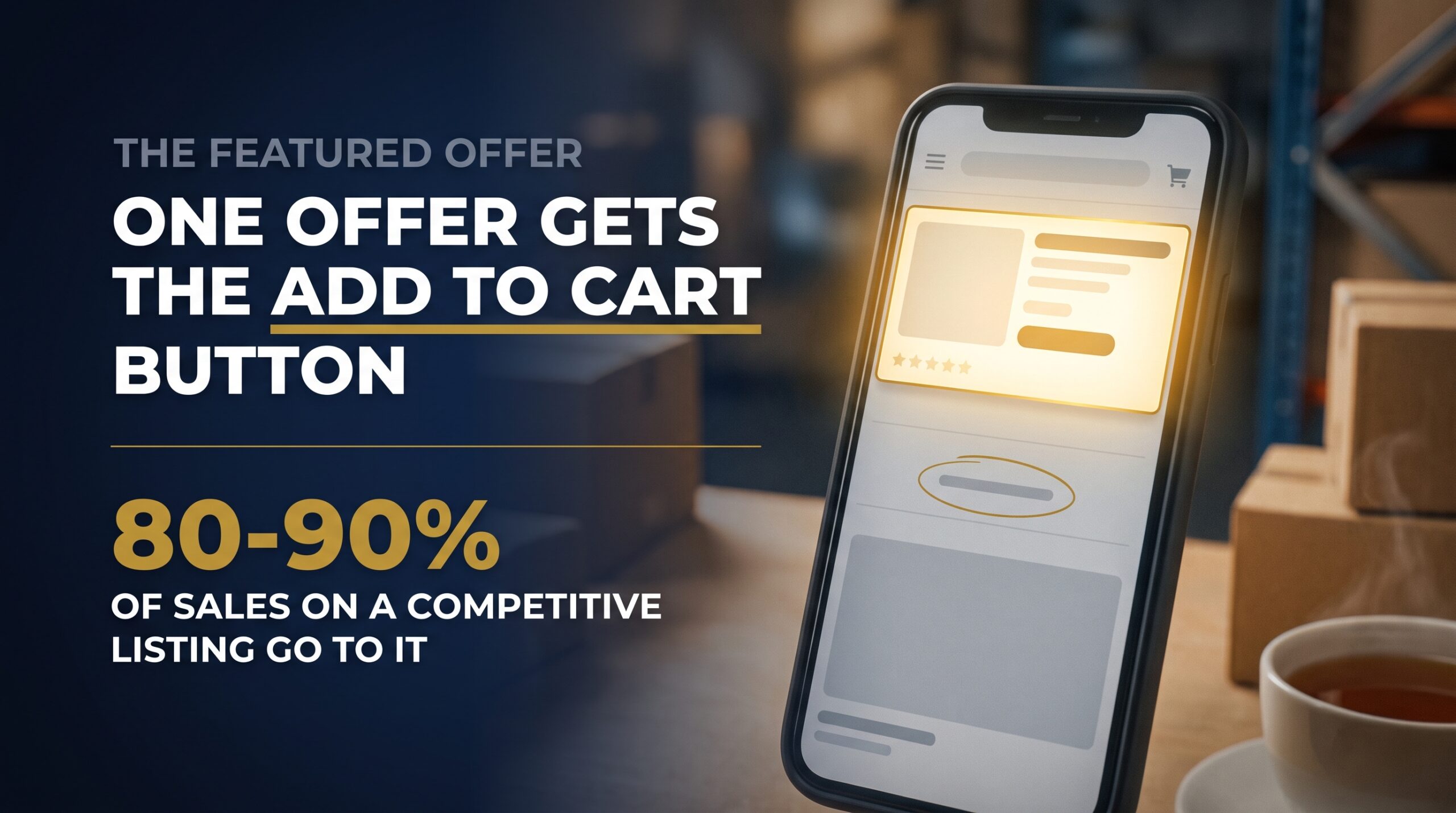
When several sellers offer the same ASIN, Amazon does not show shoppers a price list. It picks one offer and puts it behind the Add to Cart button. That offer is the featured offer, still known to most of us as the Buy Box. Everyone else gets a link.
The featured offer versus the other sellers list
The amazon featured offer vs other sellers distinction is the whole game. The featured offer needs one tap to buy. The other sellers list needs a deliberate click, a comparison, and a second decision — three chances for the shopper to give up. Rakesh Vaidya, who sells car accessories out of Nagpur, tracked this for a month and found 74% of his orders on one ASIN arrived on the days he held the badge.
How much of an ASIN’s revenue it captures
The commonly quoted figure is that 80–90% of sales on a competitive listing flow through the featured offer. On thin-margin commodity ASINs with six sellers, it can be higher still. You are not competing for a share of the traffic. You are competing for almost all of it.
Why mobile traffic makes the badge decisive
On a phone screen, the other sellers link sits below the fold, in grey, next to nothing that suggests urgency. Most Indian shoppers are buying on the app. That single design fact is why the badge decides your month.
How Amazon Decides Which Offer Wins
No one outside Amazon has the formula, but the inputs are well documented and consistent. The algorithm is trying to answer one question: which offer gives this shopper the best combination of total cost, delivery certainty and low risk of something going wrong?
The signals the algorithm weighs most
Delivery promise, seller performance history, fulfilment method, stock depth and landed price all feed in. Meenal Deshpande, who sells yoga mats from Pune, held the badge at ₹899 against a competitor at ₹849 for five straight weeks, purely because her promise showed next-day delivery and her order defect rate sat near zero. Price is one voice in a committee, not the chairman.
Landed price, not just your listed price
Amazon compares what the customer actually pays — item price plus shipping — against everyone else’s. A seller at ₹420 with ₹60 shipping loses to a seller at ₹460 with delivery included, even though the sticker looks cheaper. Before you cut anything, check whether your shipping charge is doing the damage.
Why the winning offer rotates during the day
When two offers score closely, Amazon splits the badge between them, so you may hold it for eight hours and lose it for four. This is normal, not a penalty. What matters is your average share across the week, not whether you own the badge at 3pm on a Tuesday.
Who Is Eligible to Compete in the First Place
Before any tactic matters, you have to clear the gate. Plenty of sellers spend months tuning prices while sitting outside the competition entirely, which is the most expensive mistake on this list.
Professional account and new condition stock
The amazon buy box eligibility requirements start with a Professional selling plan and inventory listed in new condition. Used and refurbished stock competes in a separate pool. If you are on an Individual plan, no amount of pricing discipline will show your offer behind the Add to Cart button.
Performance metrics that gate your access
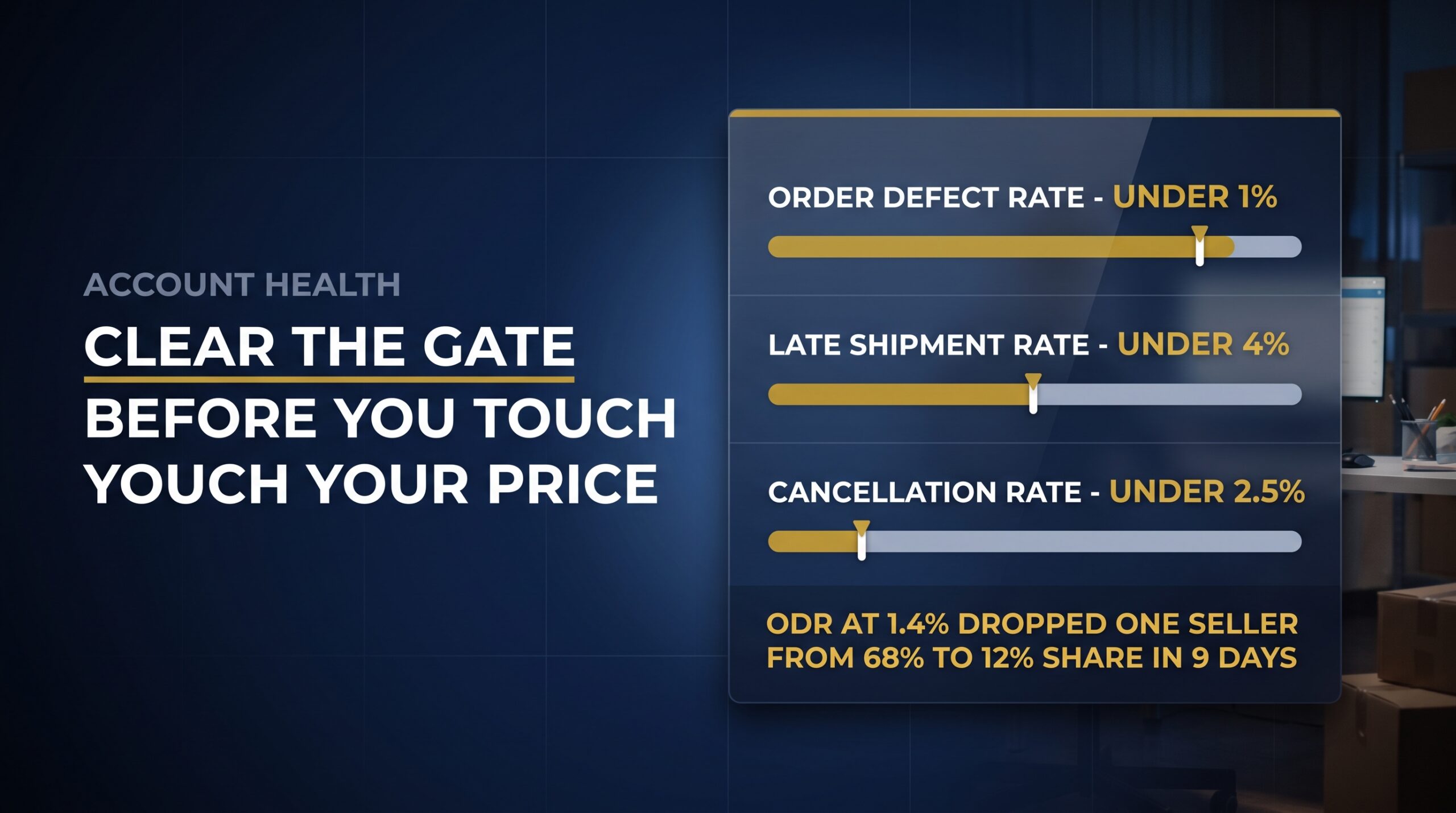
Amazon watches three numbers closely: order defect rate below 1%, late shipment rate below 4%, and pre-fulfilment cancellation rate below 2.5%. If those thresholds are new to you, it is worth reading how account health metrics get sellers suspended before you go any further. Arjun Sethi, who sells LED lighting from Ludhiana, breached ODR at 1.4% after a bad batch and watched his share fall from 68% to 12% inside nine days, with his price untouched.
Categories and ASINs with tighter rules
Some categories carry stricter conditions — approval requirements, hazmat handling, brand restrictions or documentation. A quick eligibility sweep before you scale a new ASIN saves weeks:
- Confirm your selling plan is Professional and billing is current
- Check each ASIN is listed as new and not restricted for your account
- Pull your Account Health page and note ODR, late shipment and cancellation rates
- Verify category approval status for anything gated
- Confirm the ASIN has no unresolved listing suppression or policy flag
Clear all five and you are in the race. Now you can talk about winning it.
If sequencing this properly feels like the part nobody explains, that is exactly the gap the 3-Day Amazon Business Training is built to close — eligibility, fulfilment and pricing taught in the order they actually matter.
Why the Lowest Price Still Loses
This is the question that brings most sellers here: why am i losing the buy box amazon, when I am visibly the cheapest offer on the page? The answer is almost always sitting in your fulfilment settings or your metrics, not your price.
Slow handling times drag your offer down
Your handling time decides the delivery date Amazon displays. Farhan Qureshi, who sells mobile accessories from Hyderabad, was ₹35 below every competitor and still holding only 22% share. He cut handling time from two days to same-day dispatch, changed nothing else, and his share reached 69% in three weeks.
Cancellations, late shipments and defects
A single week of cancelled orders after a supplier failure can push your pre-fulfilment cancellation rate past 2.5% and cost you the badge for a month, because these metrics roll over trailing windows. Negative feedback, A-to-Z claims and chargebacks all feed order defect rate, and ODR is the harshest gate of the three.
Running thin on stock kills your share
Amazon does not want to feature an offer that will stock out mid-promise. Low quantity on hand reduces your share quietly, and a zero balance removes you entirely while a competitor inherits your traffic and your reviews momentum — which is why knowing how to handle stockouts without losing momentum matters as much as any pricing tactic. Hold a genuine buffer on your top five ASINs, always.
FBA, Easy Ship or Self-Ship: What Wins More
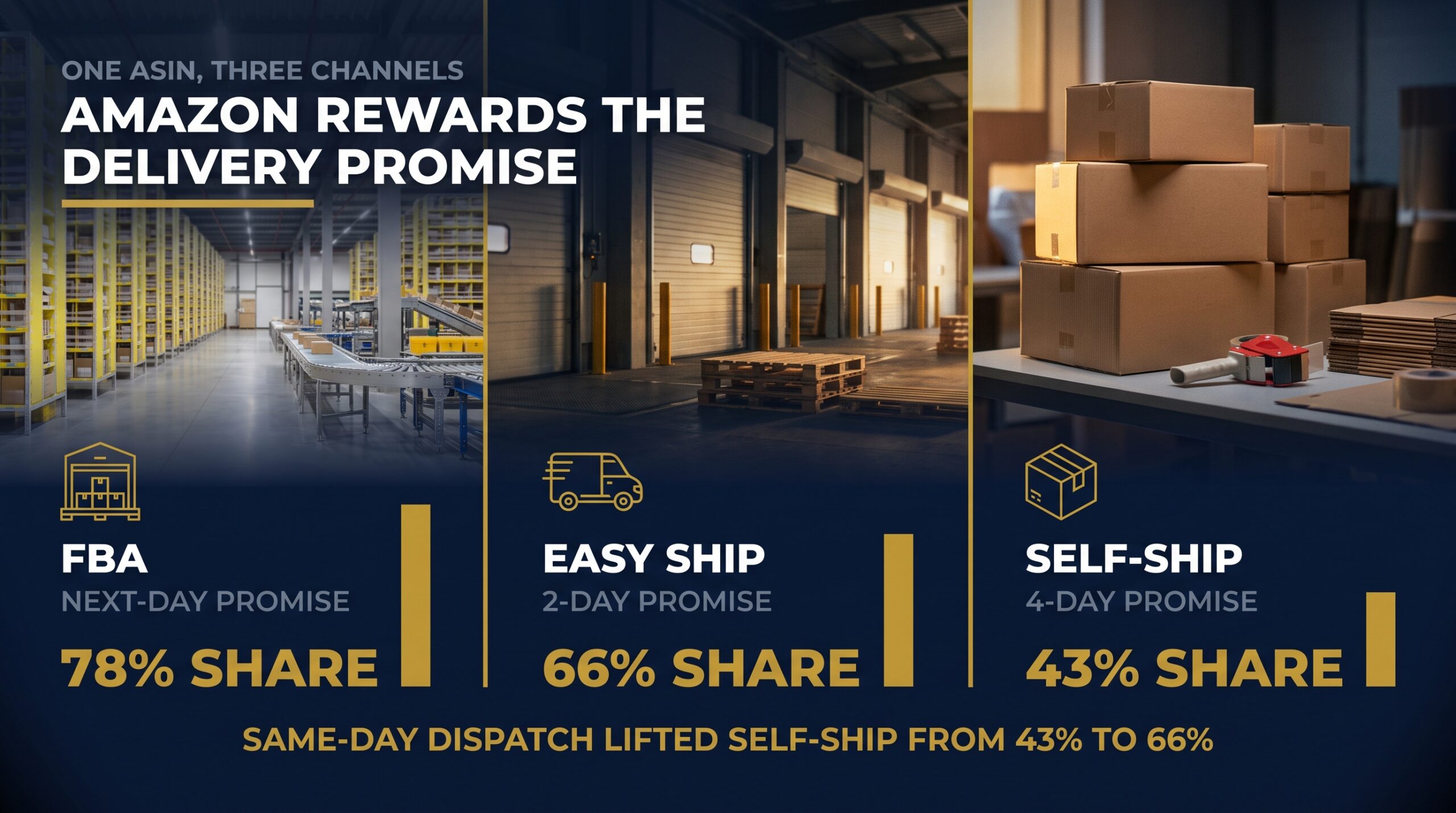
The honest answer to the fba vs fbm buy box share question is that Amazon rewards the delivery experience, not the label on it. Fulfilment by Amazon usually delivers that experience with less effort, which is why it wins more often, and the full comparison of FBA and FBM economics is worth reading before you commit stock.
How the delivery promise and Prime help
FBA stock carries Prime badging, fast displayed delivery dates, and Amazon’s own customer service absorbing returns and complaints — which keeps your defect metrics clean. Easy Ship sits in the middle: you store, Amazon’s courier network collects and delivers, and the promise stays competitive.
Making self-shipping genuinely competitive
Self-shipping can hold its own, but only with real discipline: same-day or next-day handling, a courier with reliable pin code coverage, and shipment confirmation entered the moment the parcel leaves. Nikhil Bhat, who sells cotton bedsheets from Mangaluru, ran both channels on the same ASIN and found FBA holding 78% share against his self-ship 43% — until he tightened dispatch to same-day, which lifted self-ship to 66%.
Comparing share across fulfilment channels
Run the comparison on your own catalogue rather than trusting a rule of thumb. Split your top-selling ASIN across two channels for three weeks, keep price identical, and read the share difference. For heavy or low-value goods, self-ship often wins on economics even at slightly lower share.
Levers That Beat a Straight Price Cut
Every rupee you drop is gone permanently, because your competitors will match it and the new price becomes the ceiling. Operations improvements compound instead, which is why the real work in how to win amazon buy box in india happens in your dispatch bay rather than your pricing screen. Work through the levers in this order.
Fix delivery speed before touching price
Handling time, courier choice, warehouse location relative to your buyers, and stock depth all move the displayed delivery date. A two-day improvement in the promise is frequently worth more share than a 5% price cut, and it costs you nothing per unit once the process is set.
Repricing rules that protect your margin
A sensible buy box repricing strategy for indian sellers begins with a hard floor calculated from landed cost, referral fee, fulfilment fee, GST and your minimum acceptable margin — then never breaches it. Automate pricing within that band using Seller Central’s pricing rules or a third-party repricer, and follow the guardrails for setting repricing rules without killing margin so you compete on matching rather than undercutting. Sneha Kulkarni, who sells brass décor from Jaipur, set a floor of ₹640 and held 71% share for four months without ever going below it.
Reviews, bundles and listing quality
Strong review velocity and a clean, complete listing raise conversion, and conversion strengthens every other signal. Better still, build a modest bundle — two units, or a product with a useful accessory — and you create an ASIN where you are the only seller and the featured offer question disappears entirely.
Building that pricing floor properly, with GST and fees accounted for, is one of the sessions sellers tell us changes their numbers fastest inside the 3-Day Amazon Business Training.
Checking Your Buy Box Share in Seller Central
You cannot manage what you do not measure, and most sellers only notice a problem when revenue drops — a week too late. Your share is reported daily, so check it deliberately.
Where the Business Reports data sits
Open Seller Central, go to Reports, then Business Reports, and choose Detail Page Sales and Traffic by Child Item. The column you want shows your amazon buy box percentage seller central reports — read it alongside sessions and unit session percentage so you can see whether a sales dip came from traffic or from losing the badge, and while you are in there, look at the other free Seller Central reports most sellers ignore.
Reading share by ASIN and date range
Read child ASIN level, not parent, because a single size or colour variant can be bleeding share while the parent looks healthy. Compare a rolling seven-day window against the previous seven days rather than eyeballing single days, since normal rotation makes daily figures noisy.
Spotting a slide before sales drop
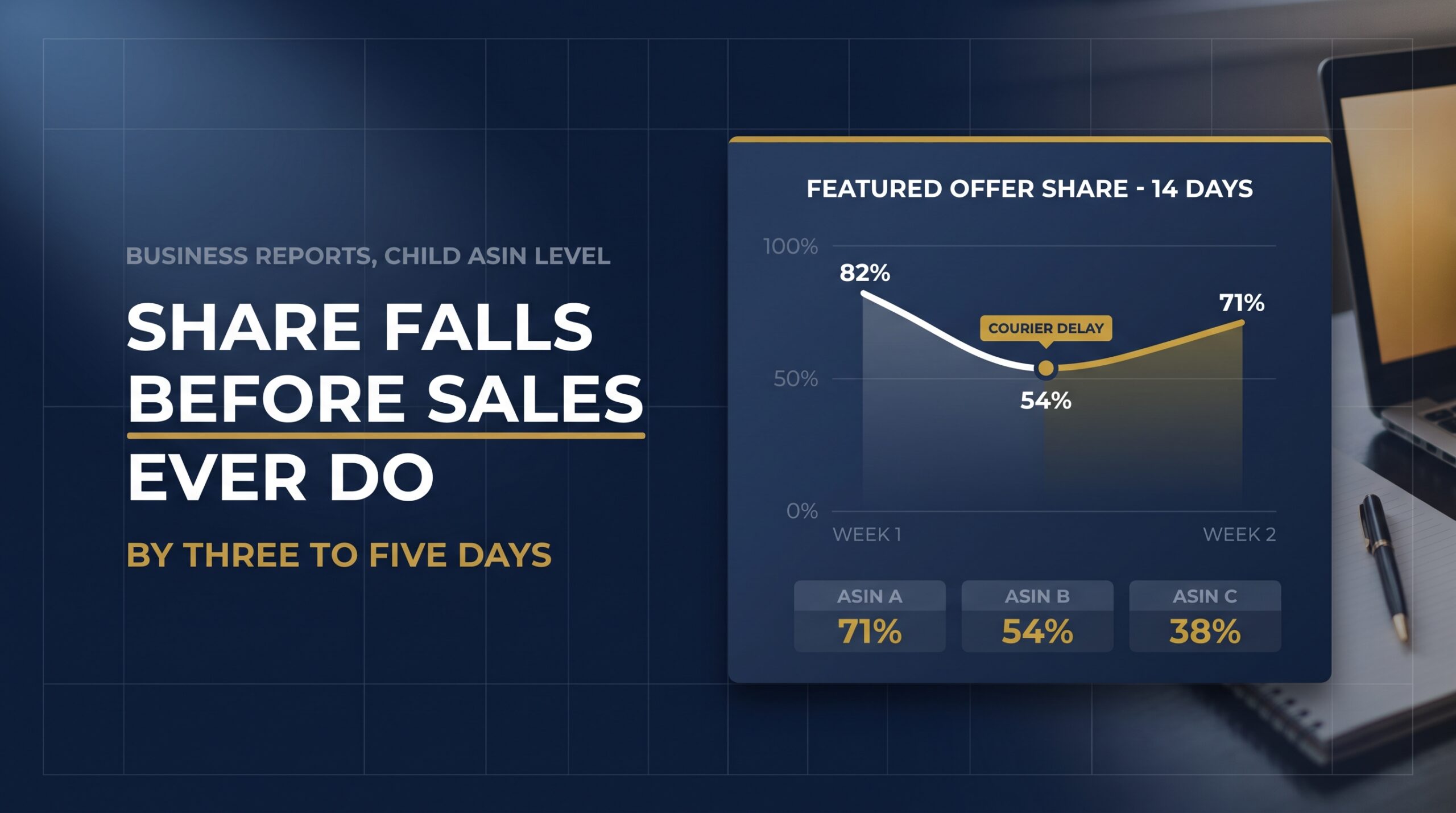
Share falls before revenue does, usually by three to five days. Divya Menon, who sells handmade soaps from Kochi, reviews the report every Monday morning; she caught a drop from 82% to 54% caused by a courier delaying her promise, fixed the pickup schedule, and recovered before the sales chart even registered a dent.
A 30-Day Plan to Lift Your Share
Everything above works best in sequence, one variable at a time, so you know what actually moved the number. Give it a month and watch a single metric each week.
Week 1: audit metrics and eligibility
Pull Account Health and your Business Report. Write down ODR, late shipment rate, cancellation rate and current share per ASIN. Fix anything outside the thresholds first and change nothing else. The number to watch this week is order defect rate.
Weeks 2 and 3: fix fulfilment and stock
Cut handling time on your top five ASINs, confirm shipments on dispatch day, and raise stock cover to at least four weeks on anything selling daily. If a self-ship ASIN keeps slipping, move that one into FBA as a test. Watch the displayed delivery date.
Week 4: test price floors, not price cuts
Only now touch price. Calculate your floor, set automated rules to match the competing landed price down to that floor, and hold. Harpreet Singh Bedi, who sells fitness gear from Amritsar, followed exactly this order and moved from 38% to 71% share in 31 days, with his average selling price ₹18 higher than when he started.
Frequently Asked Questions
What is the Amazon Buy Box and how does the algorithm decide the winner?
The Buy Box, officially the featured offer, is the offer sitting behind the Add to Cart button when several sellers list the same ASIN. Amazon’s algorithm weighs landed price, displayed delivery date, fulfilment method, stock depth and seller performance history, then selects the offer it believes gives the shopper the best overall experience. Price matters, but it is one input among several and rarely the deciding one.
Why am I not winning the Buy Box even with the lowest price?
Usually your delivery promise or your metrics are the problem. A slow handling time pushes your displayed delivery date days behind a competitor’s, and Amazon prioritises certainty of arrival. Order defect rate above 1%, late shipments above 4% or cancellations above 2.5% will also suppress your offer. Check whether your shipping charge makes your landed price higher than it looks on the sticker.
What are the eligibility requirements to compete for the Buy Box?
You need a Professional selling plan, inventory listed in new condition, and account health metrics inside Amazon’s thresholds — order defect rate under 1%, late shipment rate under 4% and pre-fulfilment cancellation rate under 2.5%. The ASIN must be in stock and free of listing suppression or policy flags, and any gated category needs approval first. Clear these before spending time on pricing tactics.
Does FBA improve Buy Box share compared with self-shipping?
Generally yes, because FBA delivers Prime badging, faster displayed delivery dates and Amazon-handled customer service, which keeps your defect metrics clean. That said, a sharp self-ship operation with same-day dispatch and reliable pin code coverage competes well, and Easy Ship narrows the gap further. Test both channels on one ASIN at identical prices for three weeks and let your own share data decide.
How do I check my Buy Box percentage in Amazon Seller Central?
Go to Reports, then Business Reports, and open Detail Page Sales and Traffic by Child Item. The Buy Box percentage column shows your share per ASIN for the date range you select. Read it at child level, since one variant can slide while the parent looks fine, and compare rolling seven-day windows instead of single days, because normal rotation makes daily figures look erratic.
Can two sellers share the Buy Box on the same listing?
Yes, and this is the most misunderstood part of the system. When two offers score closely, Amazon rotates the featured offer between them across the day, which is why your share reads 48% rather than zero or a hundred. Rotation is not a penalty. It means you are competitive and one improvement — usually delivery speed or stock depth — will tip the split your way.
How long does it take to regain the Buy Box after fixing metrics?
Expect one to four weeks, because performance metrics move on trailing windows rather than instantly. Handling time and stock changes show up in a few days, since the displayed delivery date updates immediately. Order defect rate recovers slowest, as older defects must age out of the window. Keep the fix in place and resist cutting price while you wait for the data to catch up.
Does the Buy Box work differently on the Amazon app and desktop?
The algorithm is the same, but the commercial impact is not. On the app, the other sellers link sits below the fold in small grey text, so shoppers almost never tap it. On desktop, competing offers are marginally more visible. Since most Indian shoppers buy on their phones, losing the featured offer costs you more today than the same loss would have five years ago.
Conclusion
Kiran got his badge back in eleven days. He did not drop his price once. He moved dispatch to same-day, switched couriers for two problem regions, and set a stock floor he refuses to breach. His margin is intact and his share sits above 70%.
That is the real answer to how to win amazon buy box in india: treat the badge as a scoreboard for your operations, not an invitation to a price war. Clear the eligibility gate, sharpen the delivery promise, hold stock depth, and only then let disciplined repricing rules do their quiet work inside a floor you calculated properly.
If you want the fulfilment and pricing discipline behind a consistently won featured offer built with you, step by step, come and take your seat at the 3-Day Amazon Business Training.

One Response
Hello Aman, This is a very informative blog about BuyBox, really. I appreciate your good effort to give such valuable information about Amazon. A big clap .
Regards