
Why Amazon Sellers Fail Without a System
The Rented-Traffic Trap
Every click you buy on Amazon is rented. You pay for it, the shopper lands on your listing, and if they don’t buy, the relationship ends right there. Amazon doesn’t share their name, email or phone number with you, and it never will. Out of every 100 people your ads bring in, you might keep five as customers and lose 95 for good. Tomorrow, you pay to bring in another 100.
Why Ad Costs Keep Climbing
More sellers join amazon.in every year, and many bid on the same keywords you do. When cost per click rises and conversion stays flat, the only lever left is a bigger budget. That’s how sellers end up with growing sales and shrinking profit.
Activity Is Not a System
Ramesh Pillai from Tiruppur sells cotton t-shirts. Over twelve months, his PPC spend went from ₹35,000 to ₹70,000 a month. Revenue rose by about 40%, and profit barely moved. He was busy with new SKUs, new campaigns and weekly listing tweaks, but none of it connected. That’s the honest answer to why most Amazon sellers fail to become profitable: not a bad product, but no Amazon sales funnel tying traffic, conversion and repeat sales together. It’s also why so many Indian Amazon sellers quit by month six.

What Is an Amazon Sales Funnel (and Where It Breaks)?
The Classic Amazon Marketing Funnel
An Amazon sales funnel is the path a shopper takes from first discovering your product to buying it, and ideally buying again. The classic Amazon marketing funnel has four stages: awareness, consideration, purchase and loyalty. Most sellers map their ads onto those stages and hope shoppers move down on their own.
The Missing Piece
The classic model breaks because everything happens inside Amazon. Shoppers who drop out between awareness and purchase simply leave. You can’t email them, message them or show them an ad on Instagram next week. The funnel leaks at exactly the point where most of your ad money goes.
Enter AC³
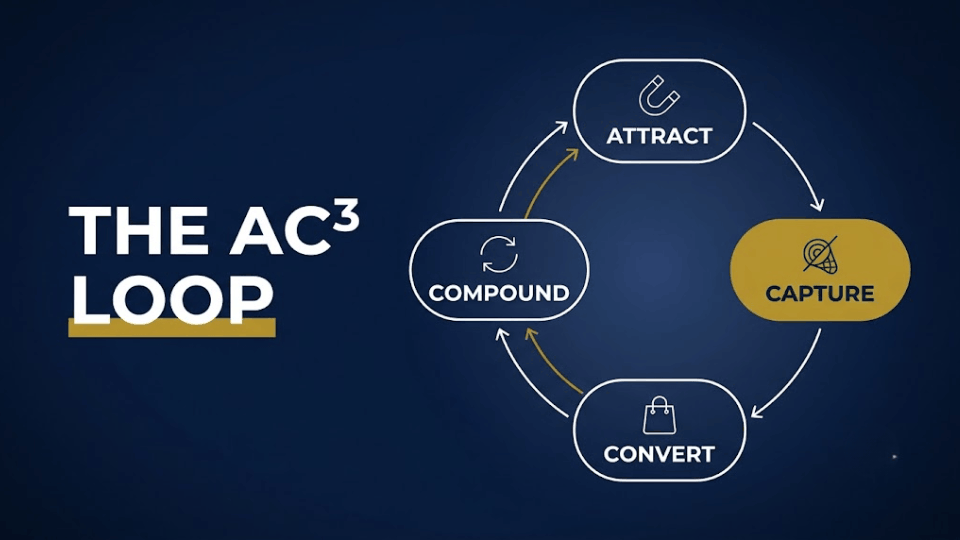
AC³ adds the step the classic model is missing. You record the visitor on your own page before Amazon does its job. The four stages run as a loop:
- Attract: Bring shoppers in with ads, mostly from outside Amazon.
- Capture: Record every visitor on your own landing page before they reach Amazon.
- Convert: Hand them to your Amazon listing, where trust and FBA close the sale.
- Compound: Retarget everyone you captured, including the people who didn’t buy.
Each stage feeds the next. Compound sends warm shoppers back into Convert, which is why the cost per sale in this Amazon sales funnel falls over time instead of rising.
Stage 1, Attract: Drive Traffic to Your Amazon Listing
Amazon PPC vs Amazon External Traffic
PPC catches shoppers who are already searching for your product on Amazon. Amazon external traffic, meaning visitors from Facebook, Instagram, YouTube or influencers, creates demand among people who weren’t searching yet. Only external traffic lets you put your own page in the path, so AC³ uses it for Attract while PPC keeps working inside Amazon.
Facebook Ads for Amazon Products in India
For most Indian categories, Instagram Reels and Facebook feed ads are the cheapest place to start. A 15-second demo video showing the product in use usually beats polished studio images. Start with a small daily budget, test two or three interest groups and scale only what brings visitors at a sensible cost.
Pick One Hero ASIN to Attract With
Sneha Kulkarni from Pune sells steel water bottles. Instead of advertising all nine variants, she ran Meta ads to her best-reviewed one-litre bottle, which had 4.3 stars, 600 reviews and healthy FBA stock. Within a month, her cost per visitor settled around ₹6, roughly a third of what her Sponsored Products clicks cost. One proven product is the strongest entry point into your Amazon sales funnel.
Stage 2, Capture: Build a Landing Page for Amazon Products
Why You Can’t Put a Facebook Pixel on Amazon
Amazon doesn’t let sellers add tracking code to their listings, so you can’t add a Meta pixel or a Google tag. Amazon Attribution, Amazon’s tool for tracking outside ad clicks, doesn’t solve this either. Its seller eligibility guide doesn’t list India (we covered the workarounds for tracking without Attribution separately), and even where it works, it only reports what happened. It never gives you an audience you can reach again.
The Door Between Ad and Listing
AC³ puts a simple page between your ad and Amazon. The flow becomes ad, then landing page, then Amazon. That page shows the product, a few benefits, some reviews and a clear “Buy on Amazon” button. In the few seconds visitors spend there, your pixel records them.
Pixel, Email or WhatsApp: What to Capture First?
Start with the pixel, because it needs no form and adds no friction. Once the page works, add a WhatsApp opt-in for a launch offer or usage guide. Indian buyers open WhatsApp far more often than email.
The Add-to-Cart Pixel on the Buy Button
Set the “Buy on Amazon” button to fire an Add to Cart event in Meta when someone clicks it. It isn’t a real Amazon cart action. It’s a label that splits your visitors into two groups: people who only viewed the page, and people who clicked through ready to buy. Arjun Menon from Coimbatore, who sells yoga mats, had 8,400 page visitors and 2,900 button clickers in his Meta account after 30 days. With direct-to-Amazon ads, he would have lost every one of them.
If you’d rather not build this page from scratch, our own tool 1smart.link was built for exactly this handover between your ad and your Amazon listing, with the pixel already in place.
Stage 3, Convert: Let Amazon and FBA Close the Sale
Why Amazon’s Product Page Is the Best Closer
Indian shoppers already trust Amazon, with reviews, easy returns and cash on delivery built in. Send them to a new website instead, and you rebuild that trust from scratch. In AC³, your landing page only captures the visitor. Amazon does the selling.
How FBA and the Prime Badge Lift Your Amazon Conversion Rate
FBA gives your listing the Prime badge and faster delivery, and Amazon handles returns and customer service. For a shopper arriving from Instagram who has never heard of your brand, those signals remove most of the hesitation. A self-shipped listing with a five-day delivery estimate loses many of them at the last step. If you’re still deciding, our FBA vs FBM comparison breaks down the trade-offs.
Fix the Listing Before You Scale Traffic
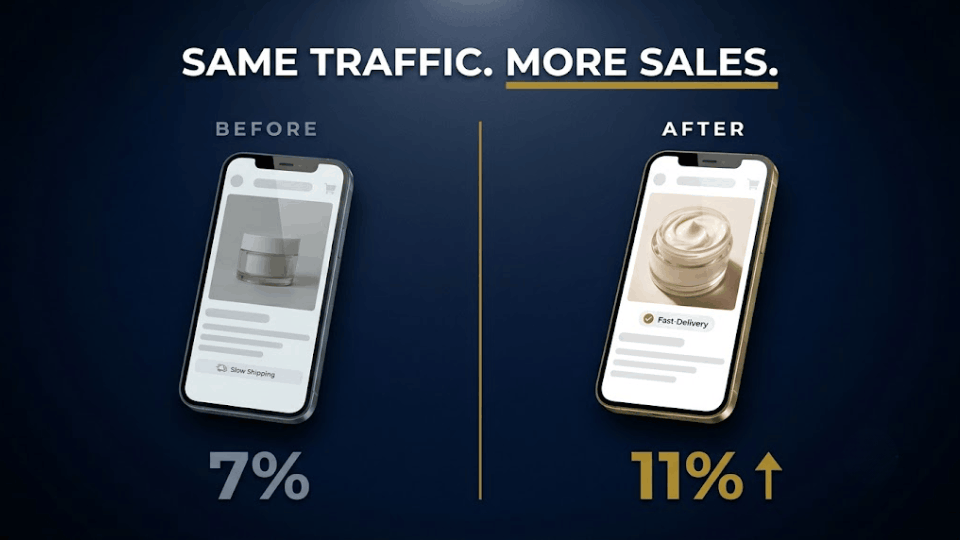
Kavya Reddy from Hyderabad sells natural skincare. She moved from self-ship to FBA and rebuilt her main image and first three secondary images to show texture and results. Over six weeks, her unit session percentage rose from 7% to 11%. Fix the listing first, and every later stage works harder.
Stage 4, Compound: Retarget Amazon Customers and Non-Buyers
Retarget the 95% With the Same Product
Your button clickers already showed interest. Most got distracted, compared prices or meant to come back later. Build a custom audience from that Add to Cart event and show them a reminder ad, a testimonial reel or a limited-time coupon. They already know your product, so they respond far better than strangers.
Cross-Sell a Complementary Product
Some of your clickers did buy. Show the whole audience a related product. Someone who bought sunglasses is a natural fit for a sun hat, and someone who bought a yoga mat may want a carry strap.
Why Warm Audiences Cut Your Ad Cost
Imran Qureshi from Lucknow sells leather wallets. He started retargeting his clicker audience with matching belts. Those retargeting ads delivered sales at about half the cost of his cold Meta campaigns. That’s the flywheel effect on a seller’s scale: every captured visitor makes the next sale cheaper.
AC³ in Action: One FBA Seller’s Amazon Sales Funnel
The Starting Point
Deepa Sharma from Jaipur sells an Ayurvedic hair oil through FBA. Six months ago, she was spending ₹60,000 a month, all of it on Sponsored Products, with an ACoS of 38%. Sales were steady, but every month began from scratch.
What Changed at Each Stage
For Attract, she moved ₹20,000 to Instagram Reels showing the oil in use. For Capture, that traffic landed on a simple page with a pixel and an Add to Cart event on the buy button. For Convert, she refreshed her images and kept FBA stock topped up so the Prime badge never dropped. For Compound, she retargeted clickers with the same oil, then cross-sold her hair mask.
The 90-Day Result
Her total ad spend stayed at ₹60,000. Her blended TACoS fell from 24% to 17%, and about 11% of her orders came through retargeting. She also ended the quarter with 11,000 warm shoppers in her Meta account, an audience she owns and can reach on any day she chooses.
How to Build a Brand on Amazon with AC³: Your First 30 Days
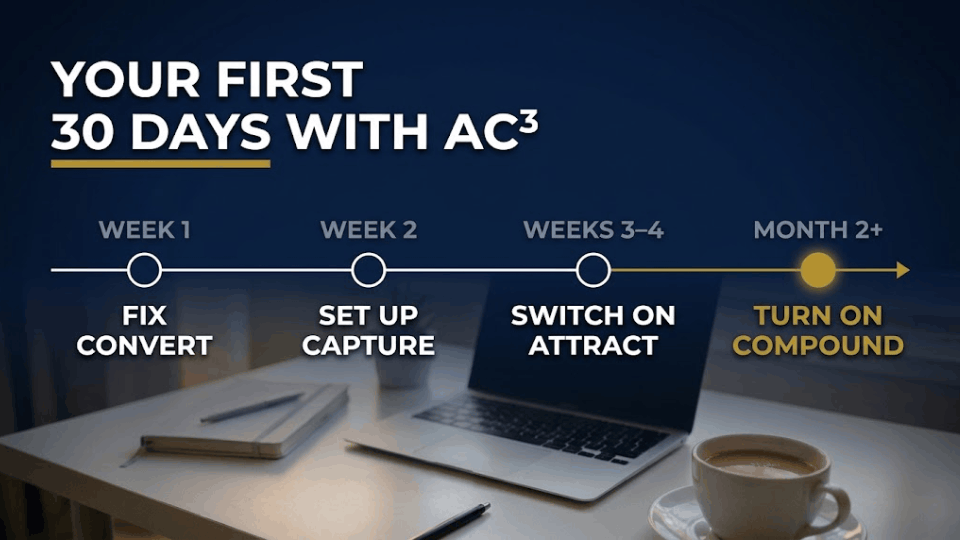
Week 1: Fix Convert First
Check your main image, price, reviews and FBA stock before spending on outside traffic. A weak listing wastes every other stage. Before you start, run your hero ASIN through our guide on how to boost your Amazon listing and fix the obvious gaps.
Week 2: Set Up Capture
Build your landing page, install the Meta pixel and set up the Add to Cart event on the buy button. Click through it yourself on your phone to confirm both events fire.
Weeks 3–4: Switch On Attract and Measure
Launch two or three small Reels campaigns to your hero ASIN. Track your cost per visitor, your click-through rate to Amazon and your Amazon sales on those days.
Month 2 Onwards: Turn On Compound
Once your clicker audience reaches a few thousand people, start retargeting them. Add a cross-sell ad as soon as you have a second product that fits.
Frequently Asked Questions
What is an Amazon sales funnel?
An Amazon sales funnel is the path a shopper follows from discovering your product to buying it and coming back. The AC³ Framework adds a Capture stage on your own landing page, so shoppers who don’t buy aren’t lost forever.
Does external traffic help Amazon ranking?
Amazon doesn’t publish how it weighs outside traffic. External visitors who convert add sales velocity, which tends to support organic rank, but traffic that doesn’t convert won’t help. Fix your listing before you scale Facebook or Instagram ads.
Can you put a Facebook pixel on your Amazon listing?
No. Amazon doesn’t allow sellers to add tracking code to product pages. That’s why AC³ puts a landing page between your ad and your listing. The pixel sits on your page, records every visitor and hands them to Amazon to buy.
How do you retarget shoppers who visited but didn’t buy?
Fire a Meta pixel event when visitors click “Buy on Amazon” on your landing page. Build a custom audience from that event and run reminder ads, testimonial reels or coupon offers to it. Warm audiences usually convert at a much lower cost than cold traffic.
Why do most Amazon sellers fail to become profitable?
Most sellers don’t fail because of a bad product. They rent every visitor, lose the 95% who don’t buy, and answer rising ad costs by spending more. Without a system that turns traffic into an owned audience, profit shrinks every year.
Does AC³ work for FBM sellers, or only FBA?
The framework works for both, but FBA makes the Convert stage much stronger. The Prime badge, faster delivery and Amazon-handled returns reassure shoppers arriving from social media. If you self-ship, expect weaker conversion on warm traffic until you move your hero ASIN to FBA.
Do I need Brand Registry to use AC³?
Not for the core system. Your landing page, pixel and retargeting audiences sit outside Amazon, so they work whether or not you’re brand-registered. Brand Registry still strengthens Convert through A+ Content, so get it as you grow.
Conclusion
Most sellers treat every rupee of ad spend as a one-time purchase. An AC³ Amazon sales funnel turns it into an asset. You attract shoppers with external ads, capture them on a page you own, let Amazon and FBA close the sale, and bring back the people who didn’t buy the first time. Each loop makes the next sale cheaper.
You don’t have to build all four stages this week. Fix your listing, put a door in front of it, and start owning your traffic one visitor at a time.
If you want to build the full AC³ system for your own products, join our 3-Day Amazon Business Training. We walk through every stage live, so you leave with a working funnel instead of another list of tactics.
